


How Does CJC-1295 Work?
Mechanism of Action Explained
Introduction
The phrase “mechanism of action” refers to the biological processes through which a molecule produces its effects. In the case of CJC-1295, research demonstrates its ability to activate the growth hormone–releasing hormone receptor, stimulate pituitary growth hormone signaling, and support downstream IGF-1 pathway research.¹²³
CJC-1295 is best understood as a GHRH analog. It does not supply growth hormone directly. Instead, it mimics growth hormone–releasing hormone, the hypothalamic signal that tells the pituitary gland to release growth hormone.
The term “CJC-1295” is often used in two related but distinct ways:
- CJC-1295 with DAC: the long-acting albumin-binding form originally studied in clinical research
- CJC-1295 without DAC / No DAC: commonly used to describe Modified GRF (1-29), a shorter-acting GHRH analog
Both forms work through the same basic receptor system. The main difference is duration of action, not the core mechanism.
CJC-1295 Mechanism of Action: The Science Explained
CJC-1295 acts upstream of growth hormone by stimulating the body’s GH-regulatory pathway. Its mechanism can be summarized as:
- Activation of the GHRH receptor
- cAMP/PKA signaling inside pituitary somatotrophs
- Endogenous growth hormone release
- Downstream IGF-1 pathway activation
- DAC-dependent differences in duration and exposure
Importantly, CJC-1295 is not growth hormone. It is a signaling peptide used to study how GHRH receptor activation influences the broader GH/IGF-1 axis.
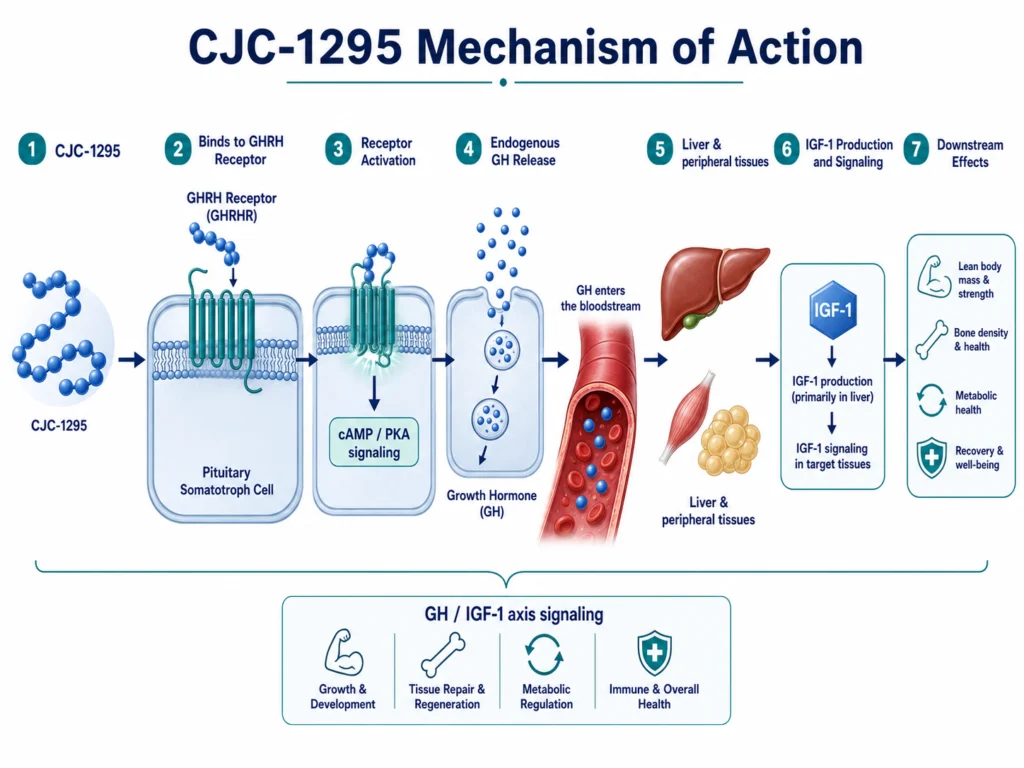
Figure 1. CJC-1295 activates the GHRH receptor to stimulate endogenous growth hormone signaling
1. GHRH Receptor Activation
CJC-1295 binds to the growth hormone–releasing hormone receptor on pituitary somatotroph cells. This is the same receptor activated by natural GHRH, the hypothalamic peptide that controls growth hormone secretion.¹²
By mimicking the active region of GHRH, CJC-1295 stimulates the pituitary through the body’s natural GH-release pathway rather than bypassing it with exogenous GH.
Why this matters:
GHRH receptor activation lets researchers study GH secretion at the level of pituitary signaling, preserving the upstream control system involved in endogenous hormone release.
2. cAMP/PKA Signaling in Pituitary Somatotrophs
Once CJC-1295 activates the GHRH receptor, the receptor stimulates adenylate cyclase, increasing cyclic AMP and activating protein kinase A.³⁴
This cAMP/PKA pathway is central to GHRH-mediated growth hormone release. It drives intracellular signaling events that support GH synthesis and secretion from pituitary somatotroph cells.Why this matters:
This makes CJC-1295 useful for studying how receptor-level stimulation produces measurable endocrine output through the GH axis.
3. Endogenous Growth Hormone Release
The direct endocrine result of GHRH receptor activation is increased growth hormone release from the pituitary. Unlike recombinant GH, CJC-1295 does not replace GH directly; it stimulates the system that regulates GH secretion.³⁵
Growth hormone is naturally secreted in pulses, shaped by GHRH, somatostatin, ghrelin, sleep, age, and metabolic status. One important finding from CJC-1295 with DAC research is that GH secretion remained pulsatile even during prolonged stimulation.⁶
Why this matters:
GH pulsatility is central to normal growth hormone biology. CJC-1295 is valuable in research because it activates the upstream signaling pathway rather than simply adding GH from outside the system.
4. Downstream IGF-1 Pathway Activation
Growth hormone released from the pituitary acts on peripheral tissues, especially the liver, to stimulate production of insulin-like growth factor 1. IGF-1 is a major downstream mediator of GH-axis activity and is involved in anabolic signaling, tissue remodeling, and metabolic regulation.⁵⁶
In healthy-adult studies, CJC-1295 with DAC produced sustained increases in both GH and IGF-1.⁵ These data apply specifically to the long-acting DAC-modified form, but they help explain why CJC-1295-class peptides are used to study GH/IGF-1 pathway activation.
Why this matters:
CJC-1295 is not only relevant to GH release itself; it is also used to study how upstream GHRH receptor activation affects downstream IGF-1 signaling.
5. DAC and Duration of Action
The biggest mechanistic distinction within the CJC-1295 category is DAC status.
CJC-1295 with DAC includes a drug-affinity-complex modification that allows the peptide to bind circulating albumin. This extends exposure and produces a longer-acting GH/IGF-1 stimulation profile.⁵⁶
CJC-1295 without DAC, commonly called Modified GRF (1-29), lacks this albumin-binding extension. It is shorter acting and more relevant to research models focused on transient GHRH receptor activation.
| Feature | CJC-1295 with DAC | CJC-1295 No DAC / Modified GRF (1-29) |
| Primary receptor | GHRH receptor | GHRH receptor |
| DAC extension | Yes | No |
| Albumin binding | Yes | No DAC-mediated binding |
| Duration profile | Long-acting | Shorter-acting |
| Main pathway | GHRHR → cAMP/PKA → GH → IGF-1 | GHRHR → cAMP/PKA → GH → IGF-1 |
| Research use | Sustained GH/IGF-1 stimulation | Transient GH-axis signaling |
Why this matters:
DAC changes how long CJC-1295 remains active. It does not fundamentally change the receptor pathway. Both forms work through GHRH receptor activation, but they create different exposure profiles.
CJC-1295’s Multi-Step Endocrine Profile
Unlike peptides that act primarily on a local tissue pathway, CJC-1295 works through a coordinated endocrine cascade:
- GHRH receptor activation at the pituitary
- cAMP/PKA signaling inside somatotroph cells
- Endogenous GH secretion
- Peripheral IGF-1 production
- Metabolic and anabolic pathway activation downstream
This makes CJC-1295 especially relevant in research on the GH/IGF-1 axis, pituitary signaling, and endocrine pulse dynamics.
Limitations: What Do Studies Say?
The strongest direct human data on CJC-1295 involve the DAC-modified long-acting analog, not the No DAC version.⁵⁶
For CJC-1295 without DAC, the mechanistic rationale is based on the broader GHRH (1-29), sermorelin, and Modified GRF literature.³⁴ That mechanism is biologically well grounded, but the evidence should still be described carefully.
The clean scientific distinction is:
- CJC-1295 with DAC: direct clinical data showing sustained GH and IGF-1 increases
- CJC-1295 No DAC / Modified GRF (1-29): shorter-acting GHRH analog used to study transient GHRH receptor activation
Both belong in the CJC-1295 research category, but claims should specify which form is being discussed.
Conclusion
CJC-1295 works by mimicking growth hormone–releasing hormone and activating the GHRH receptor on pituitary somatotroph cells. This triggers cAMP/PKA signaling, stimulates endogenous growth hormone release, and supports downstream IGF-1 pathway activation.
The key distinction is DAC status. CJC-1295 with DAC is long-acting because it binds albumin, while CJC-1295 without DAC — commonly called Modified GRF (1-29) — is shorter acting. Both forms share the same core mechanism, but they differ in duration, exposure, and research use case.
FAQs About CJC-1295 Mechanism
How does CJC-1295 stimulate growth hormone release?
CJC-1295 activates the growth hormone–releasing hormone receptor on pituitary somatotroph cells. This triggers cAMP/PKA signaling and supports endogenous growth hormone secretion.
Is CJC-1295 the same as growth hormone?
No. CJC-1295 is not growth hormone. It is a GHRH analog that stimulates the pituitary’s own growth hormone-release pathway.
What is the difference between CJC-1295 with DAC and No DAC?
CJC-1295 with DAC includes an albumin-binding drug-affinity-complex extension, making it longer acting. CJC-1295 without DAC lacks this extension and is shorter acting.
Does CJC-1295 increase IGF-1?
CJC-1295 stimulates GH release, and GH can drive downstream IGF-1 production. Human studies of CJC-1295 with DAC showed sustained increases in GH and IGF-1.
Does DAC change how CJC-1295 works?
DAC mainly changes duration of action by enabling albumin binding. The core mechanism — GHRH receptor activation followed by GH and IGF-1 signaling — remains the same.
Related Articles
- What Is CJC-1295?
- CJC-1295 Benefits
- CJC-1295 Side Effects & Safety
- CJC-1295 DAC vs No DAC
- How does Ipamorelin Work?
- How Does Sermorelin Work?
References
- Rivier J, Spiess J, Thorner MO, Vale W. Characterization of a growth hormone-releasing factor from a human pancreatic islet tumour. Nature. 1982;300(5889):276–278. https://pubmed.ncbi.nlm.nih.gov/6292724/
- Guillemin R, Brazeau P, Bohlen P, et al. Growth hormone-releasing factor from a human pancreatic tumor that caused acromegaly. Science. 1982;218(4572):585–587. https://pubmed.ncbi.nlm.nih.gov/6812220/
- Losa M, Schopohl J, von Werder K. Stimulation of GH with human GRF1-44, GRF1-40, and GRF1-29 in normal subjects. Klin Wochenschr. 1984;62(23):1109–1113. https://pubmed.ncbi.nlm.nih.gov/6240568/
- Barron JL, Hopkins KD, Dunger DB, Hesp R, White A. GHRH (1-29)-NH₂ and a D-Ala² analog are potent stimulators of GH release in normal men. Clin Endocrinol (Oxf). 1985;23(4):399–407. https://pubmed.ncbi.nlm.nih.gov/2866496/
- Teichman SL, Neale A, Lawrence B, Gagnon C, Castaigne JP, Frohman LA. Prolonged stimulation of growth hormone and insulin-like growth factor I secretion by CJC-1295, a long-acting analog of GH-releasing hormone, in healthy adults. J Clin Endocrinol Metab. 2006;91(3):799–805. https://pubmed.ncbi.nlm.nih.gov/16352683/
- Ionescu M, Frohman LA. Pulsatile secretion of growth hormone persists during continuous stimulation by CJC-1295, a long-acting growth hormone-releasing hormone analog. J Clin Endocrinol Metab. 2006;91(12):4792–4797. https://pubmed.ncbi.nlm.nih.gov/17018654/
- Sackmann-Sala L, et al. Activation of the GH/IGF-1 axis by CJC-1295, a long-acting GHRH analog. Clin Cancer Res. 2009. https://pmc.ncbi.nlm.nih.gov/articles/PMC2787983/
