

 Account
 Tesamorelin Benefits
What Research Shows
Introduction
Tesamorelin is a stabilized analog of growth hormone–releasing hormone studied for its ability to activate the GHRH receptor, stimulate endogenous growth hormone secretion, and increase downstream insulin-like growth factor 1 signaling.¹²
Unlike recombinant growth hormone, tesamorelin does not supply GH directly. Instead, it acts upstream at the pituitary gland, making it useful for studying the body’s own GH-regulatory system.
Tesamorelin is also the active ingredient in an FDA-approved prescription medication. Its approved use is narrowly defined: reducing excess abdominal fat in adults with HIV-associated lipodystrophy. It is not approved as a general weight-loss medication.¹
This article reviews the major evidence-based and investigational research areas associated with tesamorelin, including:
- The distinction between targeted visceral-fat reduction and overall weight loss
- Endogenous GH and IGF-1 signaling
- Visceral adipose tissue reduction
- Waist circumference and body-composition changes
- Triglyceride and lipid-related research
- Hepatic-fat research
- Skeletal-muscle composition
Summary Table: Tesamorelin Benefits and Evidence
| Benefit / Research Area | Evidence Level | Study Type | Notes |
| Visceral adipose tissue reduction | Strong | Phase 3 human trials | FDA-approved in adults with HIV-associated lipodystrophy |
| GH and IGF-1 pathway activation | Strong | Human pharmacodynamic and clinical research | Increases endogenous GH, IGF-1, and IGFBP-3 |
| Waist and trunk-fat changes | Moderate to strong | Phase 3 secondary outcomes | Reduced waist circumference and trunk fat in the studied population |
| Lean-body-mass research | Moderate | Phase 3 secondary outcomes | Modest increases were reported without substantial weight loss |
| Triglyceride and lipid research | Moderate | Randomized trials and responder analyses | Improvements were reported, particularly among participants with meaningful VAT reduction |
| Hepatic-fat research | Emerging | Small randomized human trials | Liver-fat reduction studied in people with HIV and fatty liver disease |
| Skeletal-muscle composition | Exploratory | Secondary imaging analysis | Changes in muscle area and intramuscular fat require further study |
| General weight loss | Not supported | FDA labeling and clinical trials | Tesamorelin is considered weight neutral and is not approved for weight management |
1. Visceral Adipose Tissue Reduction
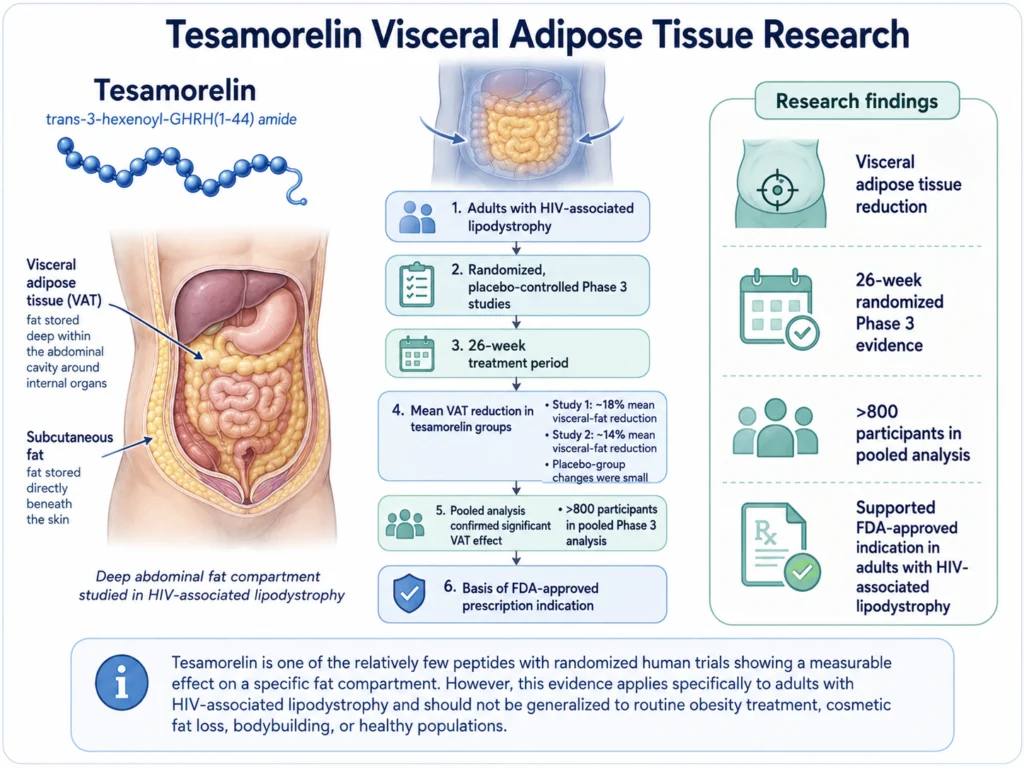
The best-established benefit of tesamorelin is its effect on visceral adipose tissue in adults with HIV-associated lipodystrophy.
Visceral adipose tissue, or VAT, is fat stored deep within the abdominal cavity around internal organs. It differs from subcutaneous fat, which is stored directly beneath the skin.
Two large, randomized, placebo-controlled Phase 3 studies evaluated tesamorelin in adults with HIV, lipodystrophy, and excess abdominal fat. After 26 weeks, mean visceral-fat reductions in the tesamorelin groups were approximately 18% in one study and 14% in the other. The corresponding placebo-group changes were small.¹³
The pooled Phase 3 analysis included more than 800 participants and confirmed a significant treatment effect on visceral adipose tissue.³
These results formed the basis of tesamorelin’s FDA-approved prescription indication.
Why it matters
Tesamorelin is one of the relatively few peptides with randomized human trials demonstrating a measurable effect on a specific fat compartment.
However, this evidence applies to adults with HIV-associated lipodystrophy. It should not automatically be generalized to routine obesity treatment, cosmetic fat loss, bodybuilding, or healthy populations.
2. Growth Hormone and IGF-1 Pathway Activation
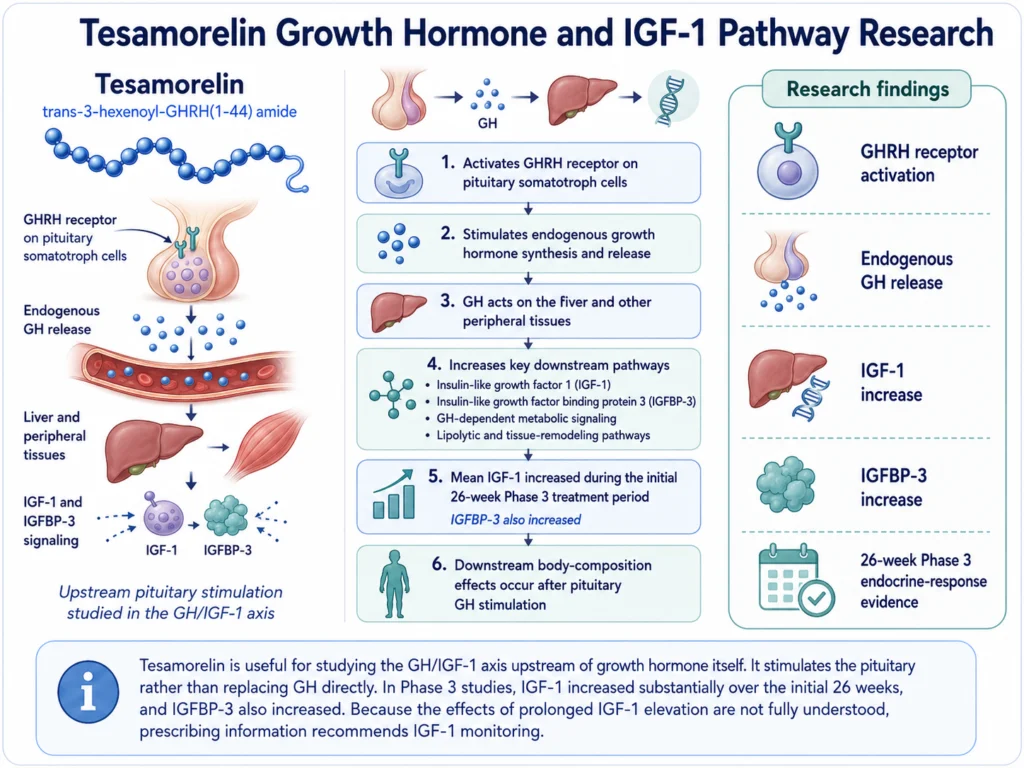
Tesamorelin activates the growth hormone–releasing hormone receptor on pituitary somatotroph cells. This stimulates the synthesis and release of endogenous growth hormone.¹²
Growth hormone subsequently acts on the liver and other peripheral tissues, increasing:
- Insulin-like growth factor 1
- Insulin-like growth factor binding protein 3
- GH-dependent metabolic signaling
- Lipolytic and tissue-remodeling pathways
In the Phase 3 studies, mean IGF-1 increased substantially during the initial 26-week treatment period. IGFBP-3 also increased.¹
This endocrine response is central to tesamorelin’s research profile because the observed body-composition effects occur downstream of pituitary GH stimulation.
Why it matters
Tesamorelin allows researchers to study the GH/IGF-1 axis upstream of growth hormone itself.
It stimulates the pituitary rather than replacing GH directly, making it relevant to research involving pituitary responsiveness, endogenous hormone release, IGF-1 regulation, and endocrine feedback.
Increased IGF-1 is not automatically beneficial in every context. FDA prescribing information recommends monitoring IGF-1 because the effects of prolonged elevations are not fully understood.¹
3. Waist Circumference, Trunk Fat, and Lean Body Mass
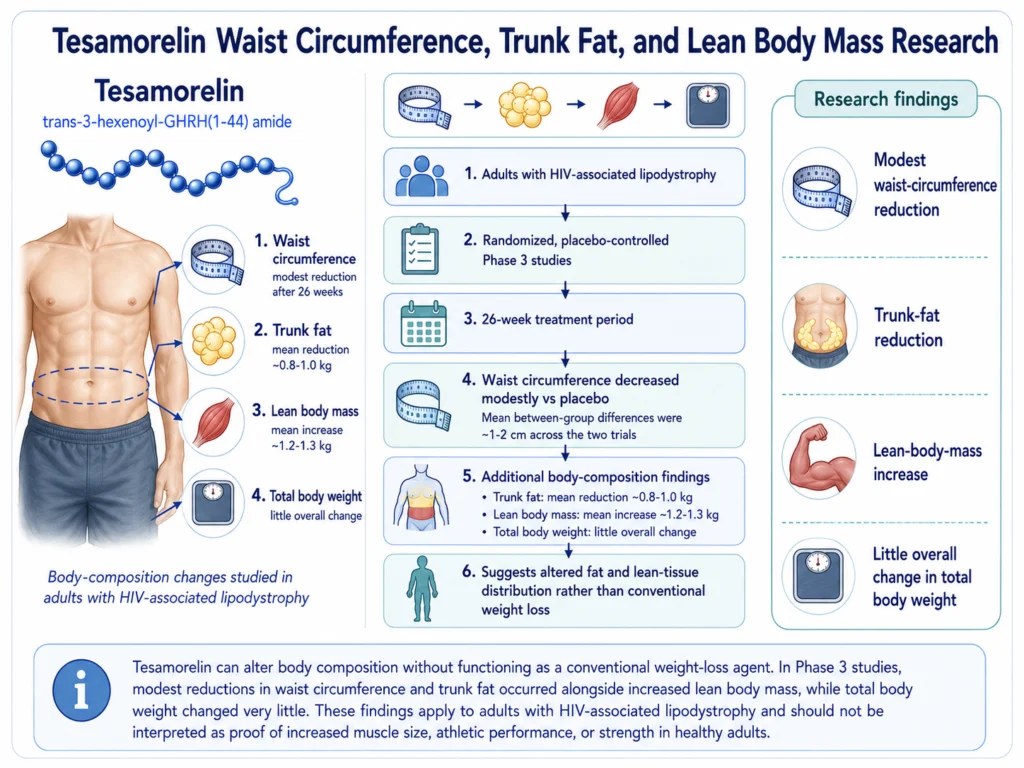
The Phase 3 studies measured several body-composition outcomes in addition to visceral adipose tissue.
After 26 weeks, tesamorelin-treated participants experienced modest reductions in waist circumference compared with placebo. The mean differences between the treatment and placebo groups were approximately 1–2 centimeters across the two trials.¹
The trials also reported:
- Mean trunk-fat reductions of approximately 0.8–1.0 kilograms
- Mean lean-body-mass increases of approximately 1.2–1.3 kilograms
- Little overall change in total body weight
These results suggest that tesamorelin can alter the distribution of fat and lean tissue without functioning as a conventional weight-loss agent.
Why it matters
Body composition describes how total body weight is distributed among fat, muscle, bone, water, and other tissues.
A study can therefore report changes in visceral fat, trunk fat, or lean mass even when the number on the scale changes very little.
These findings are clinically grounded in the studied HIV population, but they should not be presented as proof that tesamorelin increases muscle size, athletic performance, or strength in healthy adults.
4. Triglyceride and Lipid-Profile Research
Tesamorelin has also been studied for its effects on triglycerides and other lipid-related measurements.
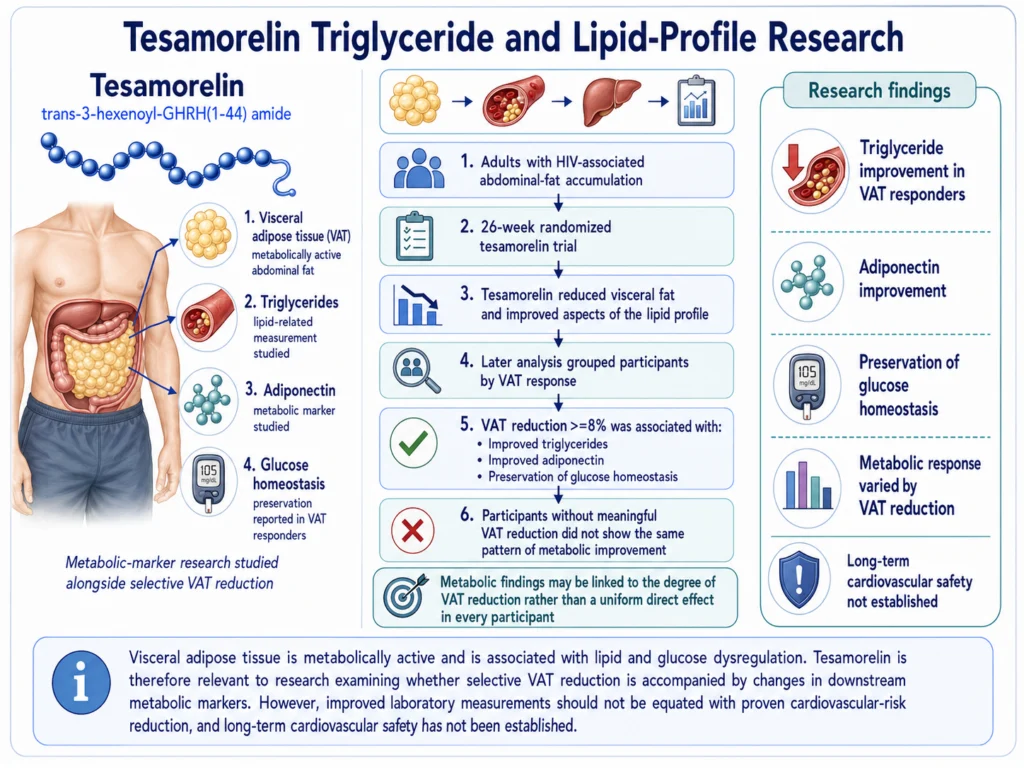
A 26-week randomized trial reported that tesamorelin reduced visceral fat and improved aspects of the lipid profile in adults with HIV-associated abdominal-fat accumulation.⁴
A later analysis divided participants according to their visceral-fat response. Participants who achieved a VAT reduction of at least 8% demonstrated improvements in measurements that included:
- Triglycerides
- Adiponectin
- Preservation of glucose homeostasis
Participants who did not achieve a meaningful VAT response did not show the same pattern of metabolic improvement.⁵
This suggests that some metabolic findings may be connected to the degree of visceral-fat reduction rather than representing a uniform direct effect in every participant.
Why it matters
Visceral adipose tissue is metabolically active and is associated with lipid and glucose dysregulation.
Tesamorelin is therefore relevant to research examining whether selective VAT reduction is accompanied by changes in downstream metabolic markers.
However, improved laboratory measurements should not be equated with proven cardiovascular-risk reduction. The current prescribing information states that tesamorelin’s long-term cardiovascular safety has not been established.¹
5. Hepatic-Fat Research
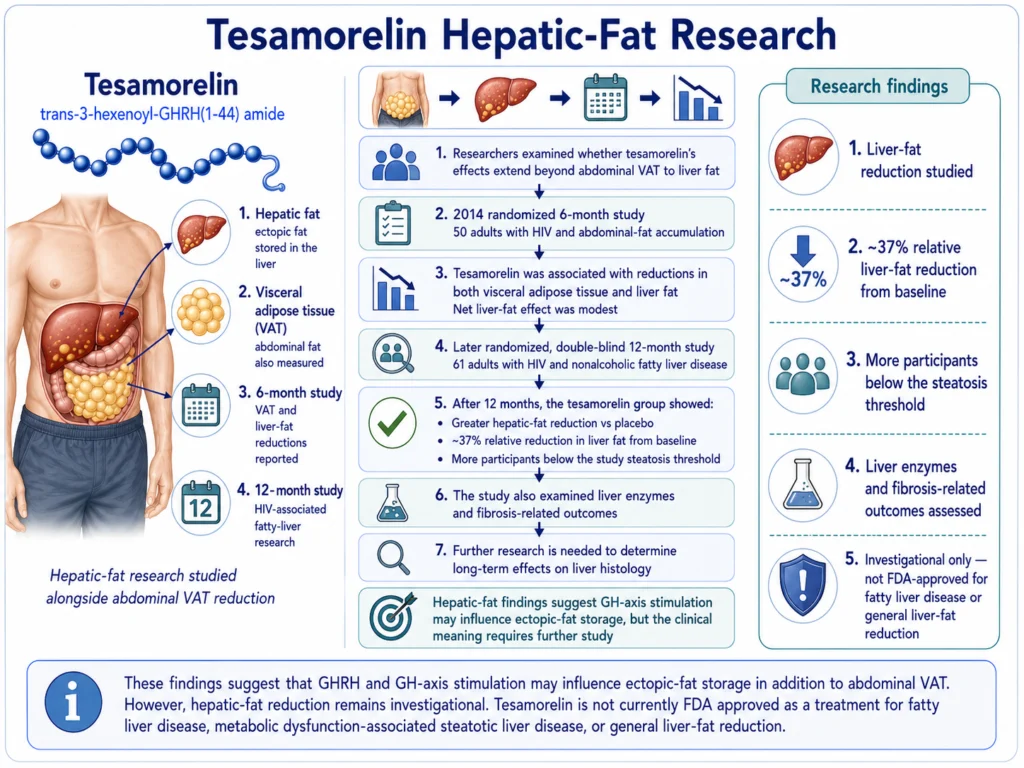
Researchers have investigated whether Tesamorelin’s effects extend beyond abdominal visceral fat to ectopic fat stored in the liver.
Six-Month Preliminary Study
A 2014 randomized trial included 50 adults with HIV and abdominal-fat accumulation. Tesamorelin was associated with reductions in both visceral adipose tissue and liver fat after six months.⁶
The net treatment effect on liver fat was modest, and the investigators emphasized that the clinical importance and long-term consequences required further study.
Twelve-Month HIV-Associated Fatty-Liver Study
A later randomized, double-blind trial studied 61 adults with HIV and nonalcoholic fatty liver disease.
After 12 months, the tesamorelin group experienced:
- A greater reduction in hepatic-fat fraction than the placebo group
- An approximately 37% relative reduction in liver fat from baseline
- A higher proportion of participants whose hepatic-fat fraction fell below the study’s threshold for steatosis
The study also examined liver enzymes and fibrosis-related outcomes. The authors concluded that tesamorelin might be beneficial in people with HIV and fatty liver disease but stated that further research was needed to determine its long-term effects on liver histology.⁷
Why it matters
These findings suggest that GHRH and GH-axis stimulation may influence ectopic-fat storage in addition to abdominal VAT.
However, hepatic-fat reduction is investigational. Tesamorelin is not currently FDA approved as a treatment for fatty liver disease, metabolic dysfunction-associated steatotic liver disease, or general liver-fat reduction.
6. Skeletal-Muscle Composition Research
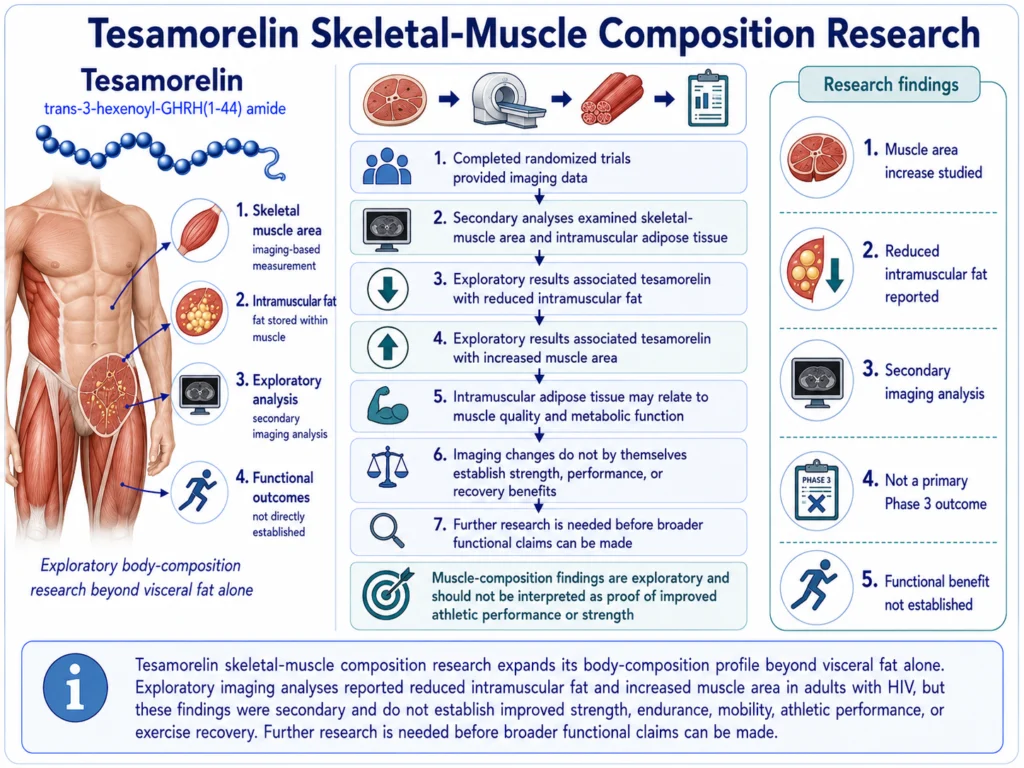
Tesamorelin has also been studied through secondary imaging analyses examining skeletal-muscle area and fat stored within muscle.
An exploratory analysis of completed randomized trials reported that tesamorelin was associated with reduced intramuscular fat and increased muscle area in adults with HIV.⁸
Intramuscular adipose tissue can be relevant to muscle quality and metabolic function, but imaging-based changes do not necessarily indicate increased physical strength, improved athletic performance, or enhanced exercise recovery.
The analysis was exploratory and was not the primary outcome of the original Phase 3 trials.
Why it matters
This research expands tesamorelin’s body-composition profile beyond visceral fat alone.
It also highlights the difference between:
- Muscle area measured by imaging
- Lean body mass measured by body-composition testing
- Functional outcomes such as strength, mobility, endurance, and performance
Further research is needed before these measurements can be translated into broader functional claims.
7. Targeted Body-Composition Changes Without General Weight Loss
Tesamorelin is sometimes discussed as a weight-loss peptide, but that description is inaccurate.
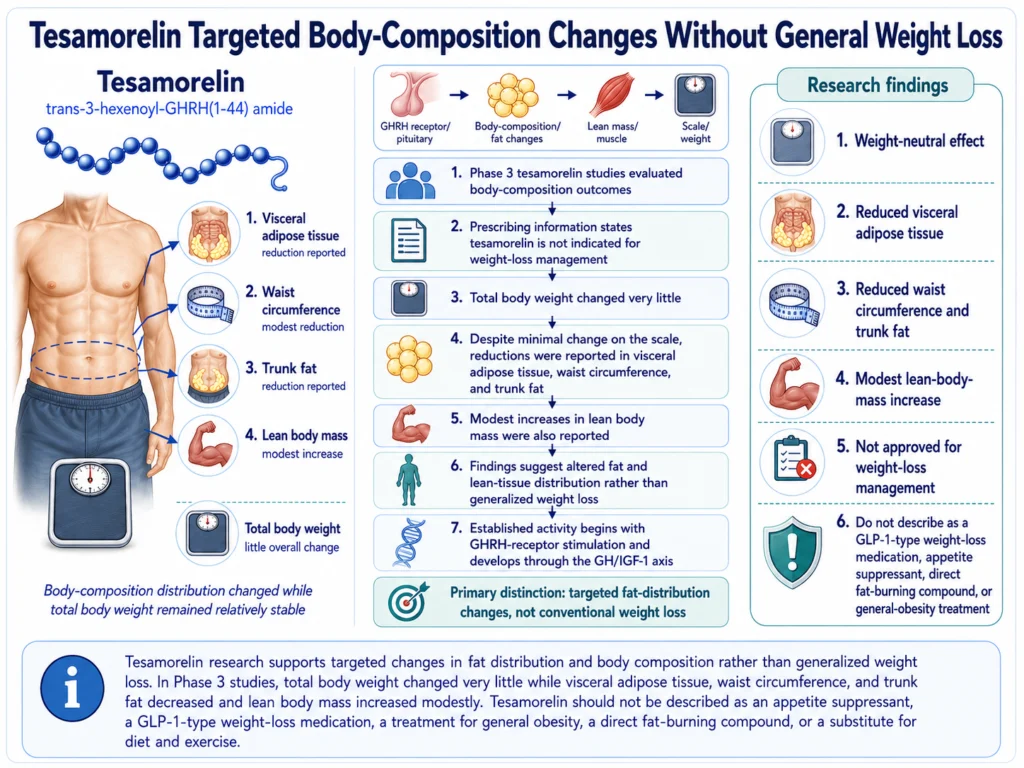
The FDA-approved prescribing information states that tesamorelin is not indicated for weight-loss management because it has a weight-neutral effect.¹
In the Phase 3 studies, total body weight changed very little even though the tesamorelin groups demonstrated reductions in:
- Visceral adipose tissue
- Waist circumference
- Trunk fat
At the same time, modest increases in lean body mass were reported.
This means the scale may remain relatively stable while the measured distribution of fat and lean tissue changes.
Why it matters
The primary research distinction is fat distribution, not generalized weight reduction.
Tesamorelin should therefore not be described as:
- An appetite suppressant
- A GLP-1–type weight-loss medication
- A treatment for general obesity
- A direct fat-burning compound
- A substitute for diet or exercise
Its established activity begins with GHRH-receptor stimulation and develops through the GH/IGF-1 axis.
8. Body-Image Distress in Clinical Research
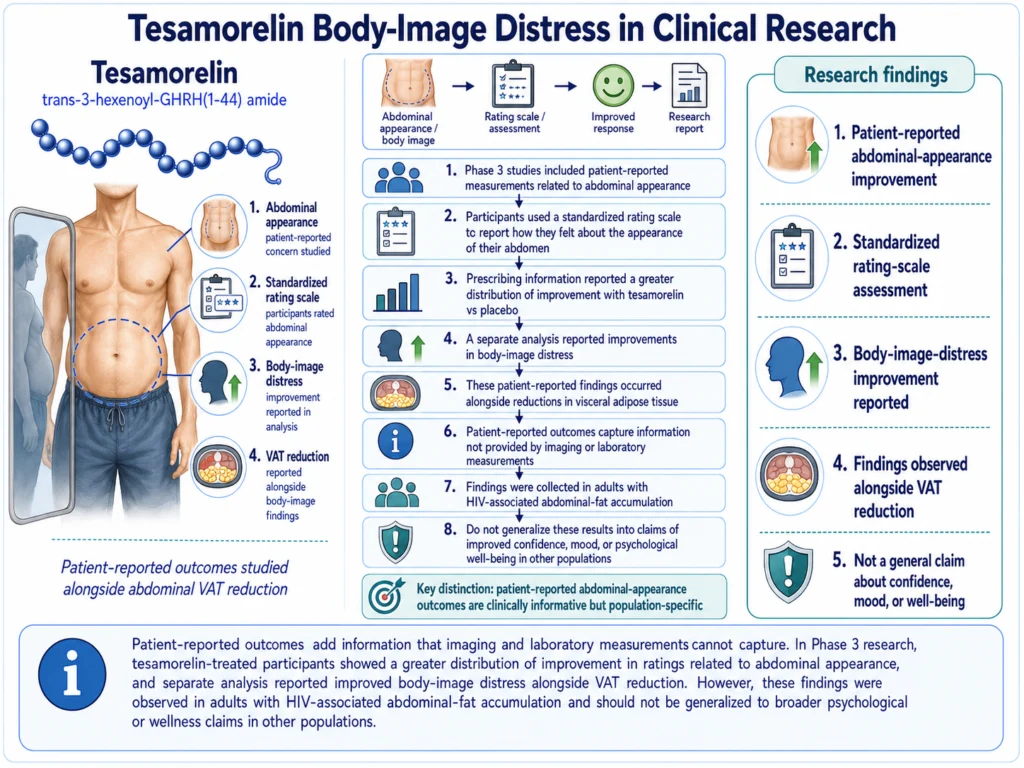
The Phase 3 studies included patient-reported measurements related to distress about abdominal appearance.
Participants rated how they felt about the appearance of their abdomen using a standardized rating scale. The prescribing information reports a greater distribution of improvement among tesamorelin-treated participants compared with placebo.¹
A separate analysis reported improvements in body-image distress alongside reductions in visceral adipose tissue.⁹
Why it matters
Patient-reported outcomes provide information that imaging and laboratory measurements cannot capture.
However, these findings were collected in adults with HIV-associated abdominal-fat accumulation. They should not be generalized into claims that tesamorelin improves confidence, mood, or psychological well-being in other populations.
Tesamorelin vs. CJC-1295: Research Benefits
Tesamorelin and CJC-1295 both stimulate the GHRH receptor, but their evidence bases and research profiles differ substantially.
| Feature | Tesamorelin | CJC-1295 |
| Class | Full-length GHRH analog | Modified GHRH analog |
| Core sequence | GHRH 1–44 | Generally based on GHRH 1–29 |
| Primary receptor | GHRH receptor | GHRH receptor |
| Main endocrine effect | Endogenous GH and IGF-1 signaling | Endogenous GH and IGF-1 signaling |
| Strongest direct evidence | Visceral-fat reduction in HIV-associated lipodystrophy | GH and IGF-1 increases with DAC-modified CJC-1295 |
| Phase 3 outcome trials | Yes | No |
| FDA-approved drug product | Yes, for one specific indication | No |
| Liver-fat research | Human randomized studies in people with HIV | No comparable clinical evidence |
| General weight-loss approval | No | No therapeutic approval |
| Research-grade status | Not equivalent to approved EGRIFTA products | Research use only |
Why it matters
Tesamorelin has a stronger human clinical evidence base for visceral-fat and body-composition outcomes.
CJC-1295 research is centered more heavily on GH/IGF-1 signaling, duration of exposure, and the distinction between DAC and No DAC forms.
Neither compound should be presented as an FDA-approved general weight-loss therapy.
Limitations: What Do Studies Say?
Tesamorelin has more human evidence than many research peptides, but the literature still has important limitations.
Population Specificity
The strongest trials involved adults with:
- HIV infection
- Antiretroviral treatment
- Lipodystrophy
- Excess abdominal visceral fat
Results from this population should not automatically be generalized to healthy adults, athletes, older adults without HIV, or people with general obesity.
Approved Versus Investigational Benefits
The FDA-approved benefit is reduction of excess abdominal fat in adults with HIV-associated lipodystrophy.
The following remain investigational or secondary research areas:
- Liver-fat reduction
- Fibrosis-related outcomes
- Skeletal-muscle composition
- Metabolic-marker changes
- Applications outside HIV-associated lipodystrophy
Weight-Neutral Effect
Tesamorelin changes particular body-composition measurements but is not approved for weight-loss management.
Response Variability
Not every participant experiences the same degree of visceral-fat reduction. Some metabolic improvements appear more pronounced among participants who achieve a meaningful VAT response.
Effect After Discontinuation
Extension research suggests that visceral fat can return after tesamorelin is discontinued. This indicates that the observed effect may depend on continued exposure rather than representing a permanent alteration in fat distribution.¹³
Long-Term Clinical Outcomes
It has not been established that tesamorelin reduces:
- Cardiovascular events
- Cardiovascular mortality
- Liver-related clinical events
- Diabetes risk
- Overall mortality
Safety Considerations
Tesamorelin stimulates GH and raises IGF-1. Current prescribing information includes warnings related to elevated IGF-1, glucose intolerance, fluid retention, malignancy risk, hypersensitivity, and injection-site reactions.¹
A complete safety discussion belongs in a separate article, but these limitations are essential when interpreting potential benefits.
Conclusion
Tesamorelin is researched primarily for its ability to stimulate endogenous growth hormone and downstream IGF-1 signaling.
Its major evidence-based and investigational research areas include:
- Reduction of visceral adipose tissue
- Endogenous GH, IGF-1, and IGFBP-3 activation
- Reduced waist circumference and trunk fat
- Modest increases in lean body mass
- Triglyceride and lipid-related changes
- Hepatic-fat research
- Exploratory skeletal-muscle composition findings
- Changes in body composition without substantial overall weight loss
The strongest evidence applies to reducing excess abdominal fat in adults with HIV-associated lipodystrophy. This is the only FDA-approved therapeutic use of tesamorelin.
Research involving liver fat, muscle composition, general metabolic health, or populations without HIV remains investigational.
Tesamorelin is therefore best described as a GHRH analog with a clinically established effect on visceral adipose tissue in one specific patient population—not as a general weight-loss, bodybuilding, anti-aging, or performance-enhancement peptide.
FAQs About Tesamorelin Benefits
What are the main research benefits of tesamorelin?
The main research areas include endogenous growth hormone and IGF-1 signaling, visceral adipose tissue reduction, waist and trunk-fat changes, lean-body-mass measurements, lipid metabolism, hepatic fat, and skeletal-muscle composition.
Does tesamorelin reduce visceral fat?
Randomized Phase 3 trials demonstrated reductions in visceral adipose tissue in adults with HIV-associated lipodystrophy. This finding supports tesamorelin’s specific FDA-approved prescription indication.
Does tesamorelin cause weight loss?
Tesamorelin is not approved for weight-loss management and is described as weight neutral. Clinical studies reported changes in visceral fat, trunk fat, waist circumference, and lean mass without substantial changes in total body weight.
Does tesamorelin increase lean body mass?
Phase 3 studies reported modest increases in mean lean body mass as a secondary outcome. These findings were observed in adults with HIV-associated lipodystrophy and do not establish improved strength or athletic performance.
Does tesamorelin improve triglycerides?
Some randomized trials and responder analyses reported improvements in triglycerides and other metabolic measurements. These effects were particularly apparent among participants who achieved meaningful reductions in visceral adipose tissue.
Does tesamorelin reduce liver fat?
Small randomized trials in people with HIV reported reductions in hepatic fat. Liver-fat reduction remains an investigational use and is not an FDA-approved indication for tesamorelin.
Does tesamorelin directly burn abdominal fat?
Tesamorelin does not directly bind to fat and destroy it. It activates GHRH receptors on the pituitary, increasing endogenous GH and downstream IGF-1 signaling. The changes in visceral fat occur through this broader endocrine pathway.
Is tesamorelin approved for human use?
Tesamorelin is the active ingredient in FDA-approved EGRIFTA prescription products for reducing excess abdominal fat in adults with HIV-associated lipodystrophy. Research-grade tesamorelin sold outside the regulated prescription supply chain is not an FDA-approved drug product and is not approved for human or veterinary use.
Related Articles
- What Is Tesamorelin?
- How Does Tesamorelin Work?
- What Is CJC-1295?
- CJC-1295 Benefits
- What Is Sermorelin?
- Benefits of Sermorelin
References
- U.S. National Library of Medicine. EGRIFTA WR (tesamorelin) Prescribing Information. DailyMed. Revised March 2025. https://dailymed.nlm.nih.gov/dailymed/drugInfo.cfm?setid=839334d3-8c1d-4c26-9036-2ab524a6ea75
- González-Sales M, Barrière O, Tremblay PO, Nekka F, Desrochers J. Population pharmacokinetic and pharmacodynamic analysis of tesamorelin and its effects on growth hormone and insulin-like growth factor 1. 2015. https://pubmed.ncbi.nlm.nih.gov/25895899/
- Falutz J, Mamputu JC, Potvin D, et al. Effects of tesamorelin in HIV-infected patients with excess abdominal fat: pooled analysis of two multicenter, double-blind, placebo-controlled Phase 3 trials with safety-extension data. Journal of Clinical Endocrinology & Metabolism. 2010;95(9):4291–4304. https://pubmed.ncbi.nlm.nih.gov/20554713/
- Falutz J, Allas S, Blot K, et al. Metabolic effects of a growth hormone-releasing factor in patients with HIV. New England Journal of Medicine. 2007;357(23):2359–2370. https://pubmed.ncbi.nlm.nih.gov/18057338/
- Stanley TL, Feldpausch MN, Oh J, et al. Reduction in visceral adiposity is associated with an improved metabolic profile in HIV-infected patients receiving tesamorelin. Clinical Infectious Diseases. 2012;54(11):1642–1651. https://pubmed.ncbi.nlm.nih.gov/22495074/
- Stanley TL, Feldpausch MN, Oh J, et al. Effect of tesamorelin on visceral fat and liver fat in HIV-infected patients with abdominal-fat accumulation: a randomized clinical trial. JAMA. 2014;312(4):380–389. https://pubmed.ncbi.nlm.nih.gov/25038357/
- Stanley TL, Fourman LT, Feldpausch MN, et al. Effects of tesamorelin on non-alcoholic fatty liver disease in HIV: a randomized, double-blind, multicentre trial. The Lancet HIV. 2019;6(12):e821–e830. https://pubmed.ncbi.nlm.nih.gov/31611038/
- Adrian S, Scherzinger A, D’Alessio D, et al. The growth hormone-releasing hormone analogue, tesamorelin, decreases muscle fat and increases muscle area in adults with HIV. Journal of Frailty & Aging. 2019;8(3):154–159. https://pmc.ncbi.nlm.nih.gov/articles/PMC6766405/
- Falutz J, Potvin D, Mamputu JC, et al. Effects of tesamorelin on body image and quality of life in HIV-infected patients with abdominal fat accumulation: a randomized placebo-controlled trial with a safety extension. Journal of Acquired Immune Deficiency Syndromes. 2010;53(3):311–322. PMID: 20101189. https://pubmed.ncbi.nlm.nih.gov/20101189/
