 Account
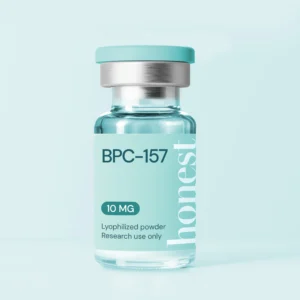
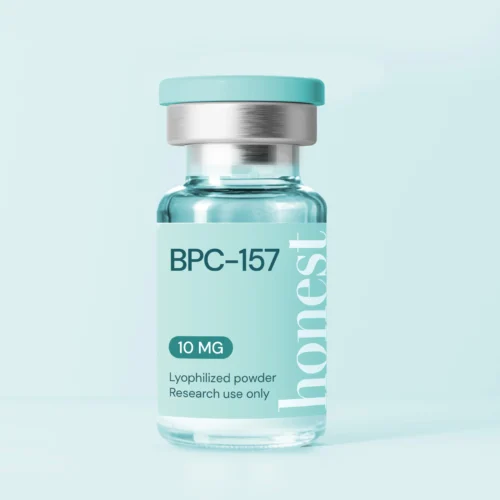
BPC-157 10mg CAS: 137525-51-0
Current Batch Results
Verified test results for the current batch
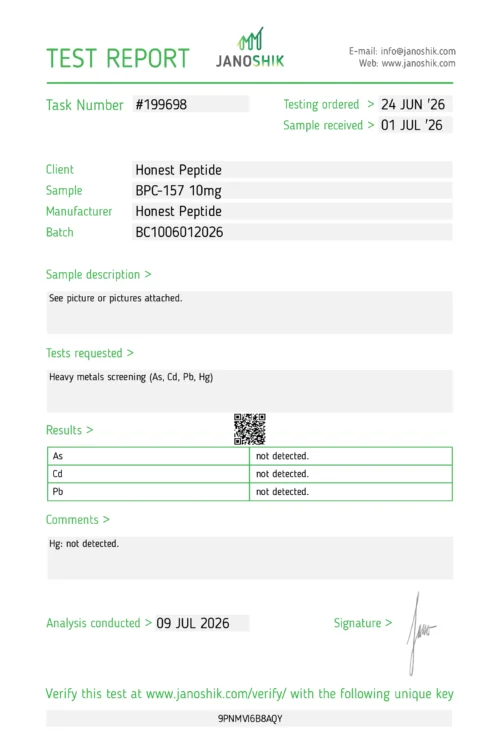
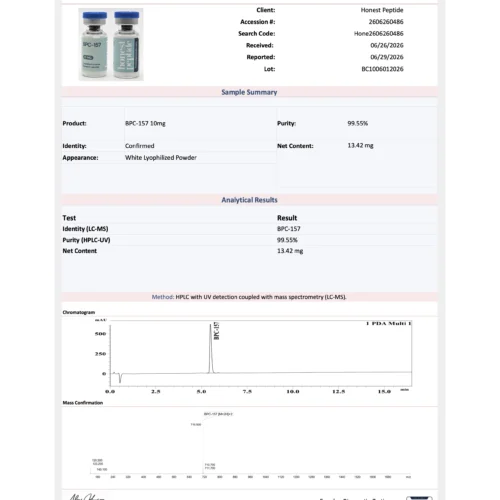
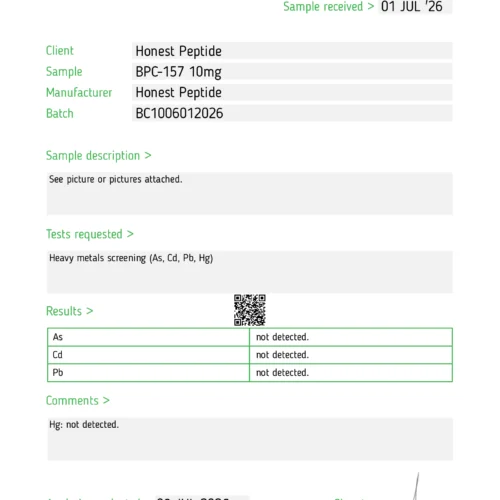
Batch number BC1006012026
99.55% Purity
13.42mg Net peptide
JUN26 Date
-
 Identity (M-S) passed
- Heavy metals cleared
- Purity (HPLC) Passed

For research use only
Not for human or animal consumption
Every Batch 3rd Party Tested
Free shipping on orders above $120
2-Day Shipping



CAS 137525-51-0
 Identity (M-S) passedHeavy metals clearedPurity (HPLC) Passed
 Volume pricing Save up to 15% with quantity-based pricing. Discounts are applied automatically in cart.
| Quantity | Discount | Per item price |
|---|---|---|
| 1Current Tier | 0% | $39.20 |
| 2 - 5Current Tier | 5% | $37.24 |
| 6 - 10Current Tier | 10% | $35.28 |
| 11 - 15Current Tier | 15% | $33.32 |
BPC-157
1 item selected
Testing
Review current lot-specific analytical results and supporting documentation for each available strength.
Verified test results for the current batch
Identity (M-S) passed Heavy metals cleared Purity (HPLC) PassedProcess
A documented, step-by-step process designed to ensure consistency, transparency, and traceability
Representative samples are selected from each production lot
Samples are submitted to a qualified third-party laboratory for analytical testing
Analytical results are reviewed against our internal release specifications
Results and supporting documentation are published online before shipment
Research
Explore key technical details, molecular characteristics, and research context for this compound.
BPC-157 emerged from research into biologically active compounds associated with gastric juice. In 1993, Predrag Sikiric and colleagues described the gastric peptide research program and its proposed connection to stress-related organ protection in experimental models.¹ Early investigations centered on the stomach and gastrointestinal tract. Over time, the research expanded into other preclinical injury models, including muscle, tendon and nerve tissue. A 2003 study, for example, examined healing in transected rat Achilles tendons and the growth of tendon-derived cells in culture.² This progression moved BPC-157 from a narrowly gastrointestinal research subject into a broader experimental model for studying tissue responses to injury. Later reviews brought together findings involving vascular signaling, connective tissue and organ-protection models.³ Despite more than three decades of investigation, the evidence base remains dominated by animal and laboratory studies. Controlled human research is limited, and preclinical findings should not be interpreted as proof of clinical benefit.

BPC-157 does not have one confirmed receptor that accounts for its reported activity. Instead, preclinical research suggests that it influences several connected pathways involved in vascular signaling, cell movement and tissue responses to injury.³ One proposed mechanism involves VEGFR2. In experimental models, BPC-157 was associated with VEGFR2 activation and downstream Akt–eNOS signaling, a pathway involved in endothelial-cell activity and new blood-vessel formation.⁴ Research has also linked the peptide to the nitric-oxide system, including modulation of vascular responses under different experimental conditions.⁵ Another area of study involves focal adhesion kinase (FAK) and paxillin. These proteins help regulate cell attachment and migration; tendon-derived cell experiments associated BPC-157 with changes in these repair-related processes.² Additional models have examined inflammatory signaling, major-vessel occlusion and ischemia–reperfusion injury.⁶ Together, these findings support a multi-pathway model involving angiogenesis, nitric-oxide regulation and cell migration. The upstream molecular target remains uncertain, and most mechanistic evidence is preclinical.
Information
Answers to common questions about research use, testing, storage, ordering, and documentation.
BPC-157 is supplied as a dry, lyophilized (freeze-dried) powder and should be white in color. If the material appears inconsistent with its documented specifications, contact our team for verification.
Every batch undergoes independent third-party analytical testing. Testing includes mass spectrometry for identity, HPLC for purity, net peptide content, heavy metals, fentanyl screening, and endotoxin testing. Full results are published in the applicable batch-specific COA or laboratory report.
Every batch must meet our release specifications before being made available for sale: confirmed molecular identity, ≥99% HPLC purity, peptide content no more than 10% below the stated amount, and successful completion of all applicable contaminant testing.
Locate the batch number printed on your product box, then scan the QR code on the vial to access our COA Library and find the matching report. Batch-specific COAs are also available directly on the product page. Each report contains independent third-party testing results, and previous batch reports are retained for historical reference
No. BPC-157 is sold individually and does not include solvents or other accessories.
BPC-157 should be kept tightly sealed and protected from moisture, light, and repeated temperature fluctuations. For shorter-term storage, refrigeration at 2–8°C may be appropriate, while freezer storage at approximately −20°C may be appropriate for longer-term preservation.
Orders placed on weekdays before our daily shipping cutoff typically ship the same business day. Orders placed after the cutoff, on weekends, or on holidays typically ship the next business day. Tracking is emailed once your order ships.
If there is a problem with your order, contact us within 30 days of delivery. Depending on the circumstances, we’ll arrange an appropriate replacement or refund.
Sale of this product is restricted to qualified researchers, laboratories, and research institutions. This material is supplied solely for controlled research use and is not intended for human consumption, veterinary use, therapeutic use, or clinical application. Purchase constitutes confirmation that the buyer is appropriately qualified and will use the material only for research purposes.
Our Quality Standards
Explore our testing methods and batch release requirements.


