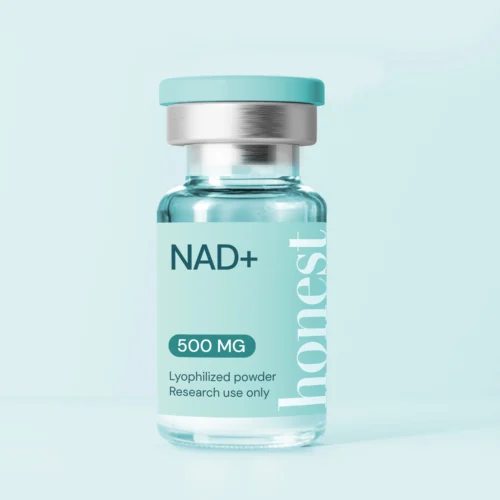
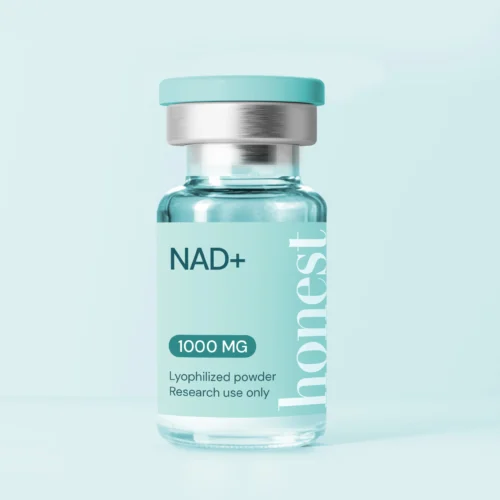
NAD+, or nicotinamide adenine dinucleotide, is a cellular coenzyme used in controlled laboratory research. Researchers use this compound to investigate oxidation–reduction reactions, energy metabolism, and NAD+-dependent enzyme activity involving sirtuins and poly ADP-ribose polymerases.
Oxidized form of nicotinamide adenine dinucleotide
Studied in research involving redox reactions and cellular energy metabolism
Used in biochemical assays and NAD+-dependent enzyme research
Supplied as a purified lyophilized powder for controlled laboratory research
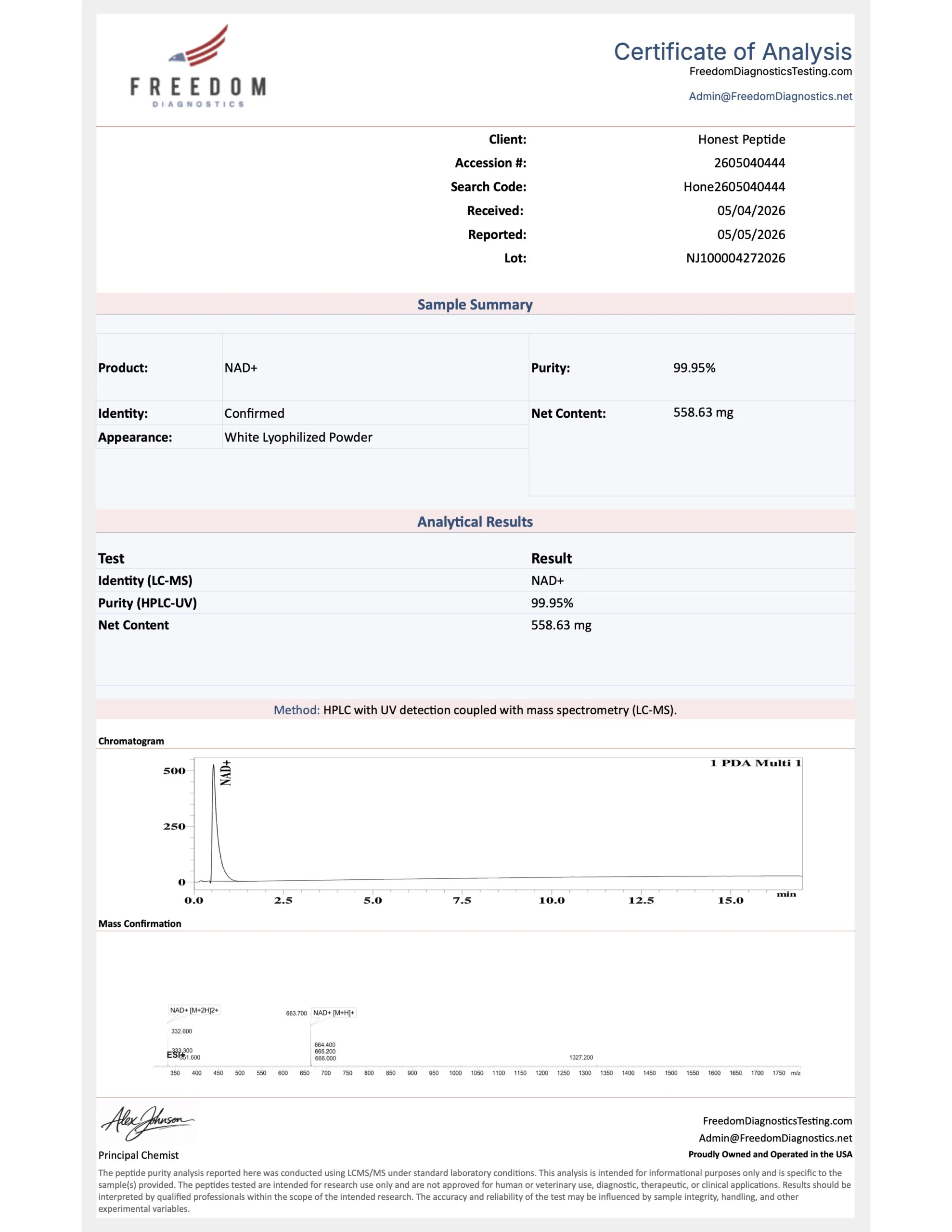
Identity (M-S) passed
Heavy metals cleared
Purity (HPLC) Passed
Identity (M-S) passed
Heavy metals cleared
Purity (HPLC) Passed
Volume pricingSave up to 15% with quantity-based pricing. Discounts are applied automatically in cart.
Quantity
Discount
Per item price
1Current Tier
0%
$63.00
2 - 5Current Tier
5%
$59.85–$106.40Price range: $59.85 through $106.40
6 - 10Current Tier
10%
$56.70–$100.80Price range: $56.70 through $100.80
11 - 15Current Tier
15%
$53.55–$95.20Price range: $53.55 through $95.20
Volume pricingSave up to 15% with quantity-based pricing. Discounts are applied automatically in cart.
Quantity
Discount
Per item price
1Current Tier
0%
$63.00
2 - 5Current Tier
5%
$59.85
6 - 10Current Tier
10%
$56.70
11 - 15Current Tier
15%
$53.55
Volume pricingSave up to 15% with quantity-based pricing. Discounts are applied automatically in cart.
Quantity
Discount
Per item price
1Current Tier
0%
$112.00
2 - 5Current Tier
5%
$106.40
6 - 10Current Tier
10%
$100.80
11 - 15Current Tier
15%
$95.20
Product SpecificationsSequence, molecular weight, appearance, and analytical
Molecular Formula
C₂₁H₂₇N₇O₁₄P₂
Molecular Weight
663.43 g/mol
PubChem CID
5883
CAS Number
53-84-9
Vial Size
10 mL
Contents
Lyophilized powder, white/off-white color
Shipping & Fulfillment
Same-Day Shipping: Orders placed before 10:00 AM ET on business days typically ship the same day.
U.S. Fulfillment: Orders ship from our East Coast warehouse.
Expedited Shipping: All orders ship via UPS 2-Day, FedEx 2-Day or USPS Priority
Free Shipping: Orders over $120 ship for free.
Tracking: Tracking information is provided once your order ships.
Discreet Packaging: Orders are shipped in secure, plain outer packaging.
Storage & handlingStorage conditions, handling precautions, temperature, and stability guidance.
Storage:
Store the lyophilized vial in a cool, dry area protected from direct sunlight.
NAD+
1 item selected
Testing
Current Batch Verification
Review current lot-specific analytical results and supporting documentation for each available strength.
A documented, step-by-step process designed to ensure consistency, transparency, and traceability
Sampled
Representative samples are selected from each production lot
Independently Tested
Samples are submitted to a qualified third-party laboratory for analytical testing
Reviewed
Analytical results are reviewed against our internal release specifications
Published
Results and supporting documentation are published online before shipment
Research
Scientific Overview
Explore key technical details, molecular characteristics, and research context for this compound.
What Is NAD⁺?
NAD⁺, or nicotinamide adenine dinucleotide, emerged from early twentieth-century research into the chemical reactions that allow cells to extract energy from nutrients. It was first recognized as a heat-stable factor required for fermentation and was later identified as a nucleotide coenzyme involved in oxidation–reduction reactions. For much of the twentieth century, NAD⁺ was studied primarily as an electron carrier. In its oxidized form, NAD⁺ accepts electrons to become NADH; NADH can then transfer those electrons through metabolic pathways that support ATP production. The research field broadened when scientists found that NAD⁺ is also consumed by enzymes involved in cellular regulation. PARP enzymes use it during responses to DNA damage, while sirtuins use it in deacylation reactions connected to metabolism and stress signaling.¹ ² These discoveries reframed NAD⁺ as both a metabolic cofactor and a signaling substrate. More recent research has examined how NAD⁺ availability changes with age and metabolic stress, along with whether precursors such as NR and NMN can alter cellular NAD⁺ pools.³ Most outcome-focused longevity claims remain investigational.
NAD⁺ connects energy metabolism with several enzyme-driven maintenance and signaling systems. In redox reactions, NAD⁺ accepts electrons during glycolysis, the citric-acid cycle and related pathways, forming NADH. NADH then supplies electrons to the mitochondrial electron-transport chain, helping create the proton gradient used for ATP synthesis.⁴ ⁵ NAD⁺ also functions as a consumed substrate rather than only as a recyclable electron carrier. Sirtuins use NAD⁺ during deacylation reactions that influence gene regulation, metabolism and cellular stress responses. PARP enzymes consume NAD⁺ to build ADP-ribose chains during DNA-damage signaling and repair.⁴ ⁶ CD38 and related enzymes cleave NAD⁺ to generate signaling molecules involved in calcium mobilization. Because sirtuins, PARPs and CD38 all draw from NAD⁺ pools, cellular availability reflects a balance among biosynthesis, salvage, redox cycling and enzymatic consumption. NAD⁺ therefore does not act through one receptor. It functions as a biochemical cofactor and substrate whose effects depend on cell type, compartment and metabolic state.
NAD⁺, nicotinamide mononucleotide (NMN) and nicotinamide riboside (NR) occupy different positions in NAD⁺ metabolism. NAD⁺ is the coenzyme used in redox and enzyme-driven reactions, while NMN and NR are precursor molecules that cells can use to replenish NAD⁺ pools.⁶ NR is phosphorylated to form NMN, which is then converted into NAD⁺. NMN enters one step later in this pathway, although its absorption is more complex than that sequence alone suggests: depending on tissue and route, extracellular NMN may be transported directly or converted to NR before cellular uptake.⁶ Both precursors have increased NAD⁺ or related metabolites in human studies, but their clinical outcome evidence remains limited. NR has a longer human research record, while NMN has been examined in a growing number of early trials. Animal findings—including long-term NMN studies—should not be assumed to predict human outcomes.⁷ Direct NAD⁺ administration supplies the final molecule extracellularly, but it does not necessarily guarantee intact entry into every cell; metabolism and transport remain important variables. Current evidence does not establish one approach as consistently superior, and direct head-to-head studies are limited.
Harden A, Young WJ. The alcoholic ferment of yeast-juice. Proc R Soc B. 1906;77(520):405–420. Original publication.
Preiss J, Handler P. Biosynthesis of diphosphopyridine nucleotide. II. Enzymatic aspects. J Biol Chem. 1958;233(2):493–500. Original publication.
Warburg O, Christian W. Über die Wirkung von Nicotinamid und verwandten Verbindungen auf die Gärung. Biochem Z. 1936;287:291–328. Original publication.
Verdin E. NAD⁺ in aging, metabolism, and neurodegeneration. Science. 2015;350(6265):1208–1213. Original publication.
Yoshino J, Baur JA, Imai S. NAD⁺ intermediates: The biology and therapeutic potential of NMN and NR. Cell Metab. 2018;27(3):513–528. Original publication.
Covarrubias AJ, Perrone R, Grozio A, Verdin E. NAD⁺ metabolism and its roles in cellular processes during ageing. Nat Rev Mol Cell Biol. 2021;22(2):119–141. Original publication.
Mills KF, Yoshida S, Stein LR, et al. Long-term administration of nicotinamide mononucleotide mitigates age-associated physiological decline in mice. Cell Metab. 2016;24(6):795–806. Original publication
Information
Product FAQs
Answers to common questions about research use, testing, storage, ordering, and documentation.
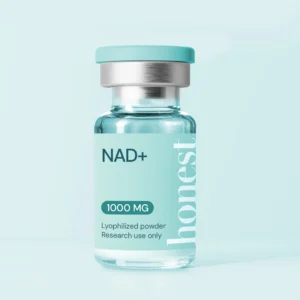
What does NAD+ look like?
NAD+ is supplied as a dry, lyophilized (freeze-dried) powder and should be white in color. If the material appears inconsistent with its documented specifications, contact our team for verification.
How is NAD+ tested?
Every batch undergoes independent third-party analytical testing. Testing includes mass spectrometry for identity, HPLC for purity, net peptide content, heavy metals, fentanyl screening, and endotoxin testing. Full results are published in the applicable batch-specific COA or laboratory report.
What quality standards must NAD+ meet?
Every batch must meet our release specifications before being made available for sale: confirmed molecular identity, ≥99% HPLC purity, peptide content no more than 10% below the stated amount, and successful completion of all applicable contaminant testing.
How can I verify my NAD+ batch and access its Certificate of Analysis (COA)?
Locate the batch number printed on your product box, then scan the QR code on the vial to access our COA Library and find the matching report. Batch-specific COAs are also available directly on the product page. Each report contains independent third-party testing results, and previous batch reports are retained for historical reference
Does NAD+ come with a solvent or other accessories?
No. NAD+ is sold individually and does not include solvents or other accessories.
How should NAD+ be stored?
NAD+ should be kept tightly sealed and protected from moisture, light, and repeated temperature fluctuations. For shorter-term storage, refrigeration at 2–8°C may be appropriate, while freezer storage at approximately −20°C may be appropriate for longer-term preservation.
When will my order ship?
Orders placed on weekdays before our daily shipping cutoff typically ship the same business day. Orders placed after the cutoff, on weekends, or on holidays typically ship the next business day. Tracking is emailed once your order ships.
What is your refund policy?
If there is a problem with your order, contact us within 30 days of delivery. Depending on the circumstances, we’ll arrange an appropriate replacement or refund.
This product is intended for qualified research use only.
Sale of this product is restricted to qualified researchers, laboratories, and research institutions. This material is supplied solely for controlled research use and is not intended for human consumption, veterinary use, therapeutic use, or clinical application. Purchase constitutes confirmation that the buyer is appropriately qualified and will use the material only for research purposes.


 Account




 Identity (M-S) passed
 Volume pricing
 Identity (M-S) passed