


 Account
What Is BPC-157?
The Peptide Discovered in Gastric Juice and Studied for Tissue Repair
Disclaimer: Information provided is for research and educational purposes only. BPC-157 is not approved by the FDA or any regulatory agency for human use.

 4X Tested
Introduction
BPC-157 (Body Protection Compound 157) is a synthetic peptide of 15 amino acids, derived from a protein fragment found in human gastric juice. Discovered in 1993, it has shown broad tissue-repair effects in preclinical models, including muscle, tendon, nerve, and gastrointestinal healing.¹ ²
Laboratory data indicate BPC-157 promotes healing in muscles, tendons, nerves, and the gastrointestinal tract, acting via angiogenesis, modulation of the nitric-oxide system, and anti-inflammatory pathways.² ³
BPC-157 Fast Facts
- Type: Synthetic pentadecapeptide
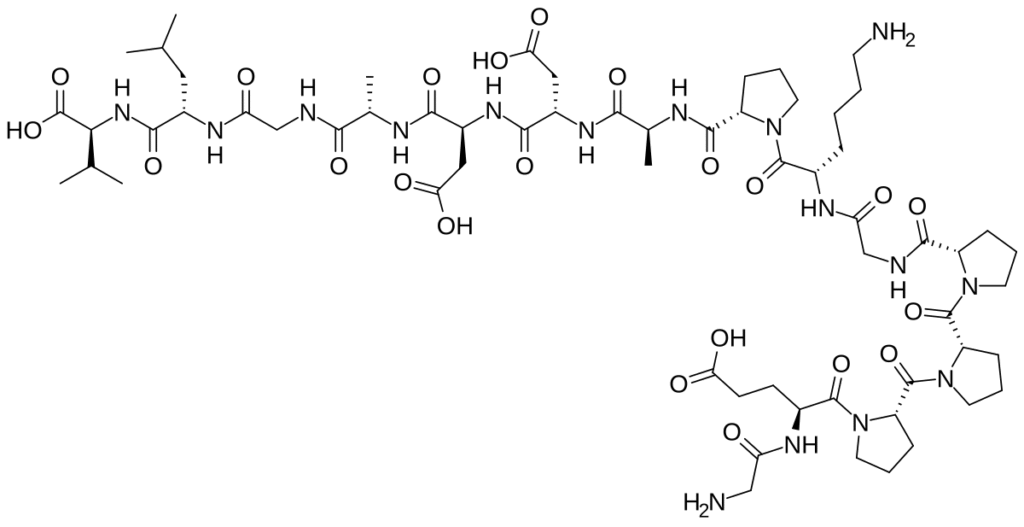
- Sequence: Gly-Glu-Pro-Pro-Pro-Gly-Lys-Pro-Ala-Asp-Asp-Ala-Gly-Leu-Val
- Discovered: 1993, Zagreb, Croatia (Dr. Sikiric)
- Key Features: Oral stability, multi-system healing
- Primary Research: Rodent models of GI, musculoskeletal, neuroprotection
Chemical Structure & Origin
Named for its Body Protection Compound origin and its position as fragment number 157, BPC-157’s 15-amino-acid sequence confers unusual stability—even in the acidic stomach environment⁴.
Discovery of BPC-157 and Research Milestones
In 1993, Dr. Predrag Sikiric and colleagues at the University of Zagreb first described BPC-157 in Journal of Physiology-Paris, detailing its stomach-stress organoprotection hypothesis and beneficial effects in rodent gastric-injury models⁴. Their isolation of BPC-157 from human gastric juice protein laid the foundation for decades of follow-up work on tissue regeneration and organ protection.
| Year | Study & Source | Key Finding |
| 1993 | Sikiric P. et al., J. Physiol.-Paris (PMID 8298609)⁴ | Ulcer healing, organoprotection |
| 1997 | Sikiric P. et al., Curr. Pharm. Des. (PMID 23755725)² | NO-system modulation, blood-pressure effects |
| 2003 | Staresinic M. et al., J. Orthop. Res. (PMID 14554208)⁵ | Accelerated Achilles tendon repair |
| 2014 | Sikiric P. et al., Curr. Pharm. Des. (PMID 23755725)² | Broad healing across multiple injury models |
How BPC-157 Differs From Other Peptides
| Peptide | Main Use | Oral? | Key Difference |
| BPC-157 | Multi-tissue repair | Yes | Stable in GI tract; broad activity |
| TB-500 | Soft tissue repair | Yes | Targets actin, cell migration |
| GHK-Cu | Skin & cosmetic | No | Copper-binding; collagen stimulation |
Conclusion & Key Takeaways
BPC-157 is a research peptide discovered in 1993 that shows broad healing potential in preclinical models. Its oral stability and multi-system effects make it unique among peptides, but clinical approval and human data are still pending.
FAQs About BPC-157
Who discovered BPC-157?
Dr. Predrag Sikiric and his team at the University of Zagreb, Croatia, in 1993⁴.
Is BPC-157 natural?
It’s a synthetic fragment based on a gastric-juice protein; it does not occur independently in the body.
Is BPC-157 FDA-approved?
No—BPC-157 remains investigational and is not approved by any regulatory agency.
Where can I learn more?
Read our in-depth history of BPC-157 for original studies and timelines.
Related Pages
Related Products


References
- Kowalski, Ł., et al. “Multifunctionality and Possible Medical Application of the BPC 157 Peptide—Literature and Patent Review.” Pharmaceuticals 18, no. 2 (2025): 185. https://doi.org/10.3390/ph18020185
- Sikiric, P., et al. “Stable Gastric Pentadecapeptide BPC 157–NO-System Relation.” Current Pharmaceutical Design 20, no. 7 (2014): 1126–35. PMID 23755725 https://pubmed.ncbi.nlm.nih.gov/23755725/
- Chang, C. H., et al. “Oral Stable Gastric Pentadecapeptide BPC 157 Therapy in Muscle and Tendon Healing.” Pharmacological Reports 72, no. 1 (2020): 206–12
- Sikiric, P., et al. “A New Gastric Juice Peptide, BPC. An Overview of the Stomach-Stress-Organoprotection Hypothesis and Beneficial Effects of BPC.” Journal of Physiology-Paris 87, no. 5 (1993): 313–27. PMID 8298609 https://pubmed.ncbi.nlm.nih.gov/8298609/
- Staresinic, M., et al. “Gastric Pentadecapeptide BPC 157 Accelerates Healing of Transected Rat Achilles Tendon and In Vitro Stimulates Tendocyte Growth.” Journal of Orthopaedic Research 21, no. 6 (2003): 976–83. PMID 14554208 https://pubmed.ncbi.nlm.nih.gov/14554208/
