Uncategorized - Honest Peptide

 đŸ‡şđŸ‡¸ USA 2-DAY SHIPPING | FREE SHIPPING OVER $120 |🇺🇸 USA 2-DAY SHIPPING | FREE SHIPPING OVER $120 | 🇺🇸 USA 2-DAY SHIPPING | FREE SHIPPING OVER $120 |

 đŸ‡şđŸ‡¸ USA 2-DAY SHIPPING | FREE SHIPPING OVER $120 |🇺🇸 USA 2-DAY SHIPPING | FREE SHIPPING OVER $120 | 🇺🇸 USA 2-DAY SHIPPING | FREE SHIPPING OVER $120 |

Peptide Storage & Stability

Definitive Guide to Peptide Storage & Stability

Understand the chemistry behind peptide stability and best practices for effective storage

Disclaimer: All information presented in this article is strictly for scientific, academic, and educational purposes. Research peptides discussed here are intended solely for laboratory research and in vitro studies. They are not approved by the FDA or any regulatory agency for human or veterinary use, clinical applications, therapeutic use, or consumption of any kind.

1. Introduction

Proper storage is the single biggest determinant of peptide longevity and experimental reproducibility.

Lyophilization dramatically enhances stability — but it is not permanent protection. Lyophilized peptides are thermodynamically stable yet chemically fragile. The moment atmospheric moisture is absorbed, molecular mobility returns and degradation begins.

This guide provides the laboratory-grade SOP for handling Research Use Only (RUO) peptides — grounded in real chemistry and optimized for researchers who need consistent results. conflict of interest and gives the researcher unbiased, empirical data—not marketing claims.

2. The Chemistry of Degradation

Peptide stability is sequence-dependent. Different residues degrade through different mechanisms. Understanding these pathways explains why proper storage matters.

Primary Degradation Pathways

• Hydrolysis

Water cleaves peptide bonds. Aspartic acid (Asp)—especially Asp-Pro motifs—is particularly hydrolysis-prone.

• Deamidation

Asparagine (Asn) and Glutamine (Gln) convert to Aspartate/Isoaspartate, altering charge and function. Rates increase sharply at alkaline pH.

• Oxidation

Atmospheric oxygen oxidizes electron-rich residues:

– Met → Met-sulfoxide

– Cys → disulfides or sulfinic acids

– Trp/Tyr → oxidative fragments

Oxidation accelerates at pH > 7.

• Photo-Degradation

UV and visible light damage aromatic residues (Trp, Tyr, Phe).

• Diketopiperazine (DKP) Formation

N-terminal X-Pro sequences can cyclize, shortening the peptide.

• Aggregation (Physical, Not Chemical)

Hydrophobic sequences self-associate or form fibrils, especially after freeze–thaw events.

The Rule:

Cold. Dry. Dark.

Every degradation pathway accelerates when any of these three are violated.

3. Lyophilization: What It Protects (and Doesn’t)

Lyophilization removes water by sublimation under deep vacuum, yielding an amorphous solid “cake.”

Benefits

• Suppresses molecular motion → dramatically slows all degradation pathways.

• Halts microbial growth → critical because RUO peptides are not sterile.

• Improves transport stability → sealed vials tolerate room temperature for days/weeks.

What It Does Not Do

It does not prevent degradation once moisture enters the vial. Nor does cake collapse indicate degradation — it is purely cosmetic.

4. Optimal Storage Conditions

Temperature

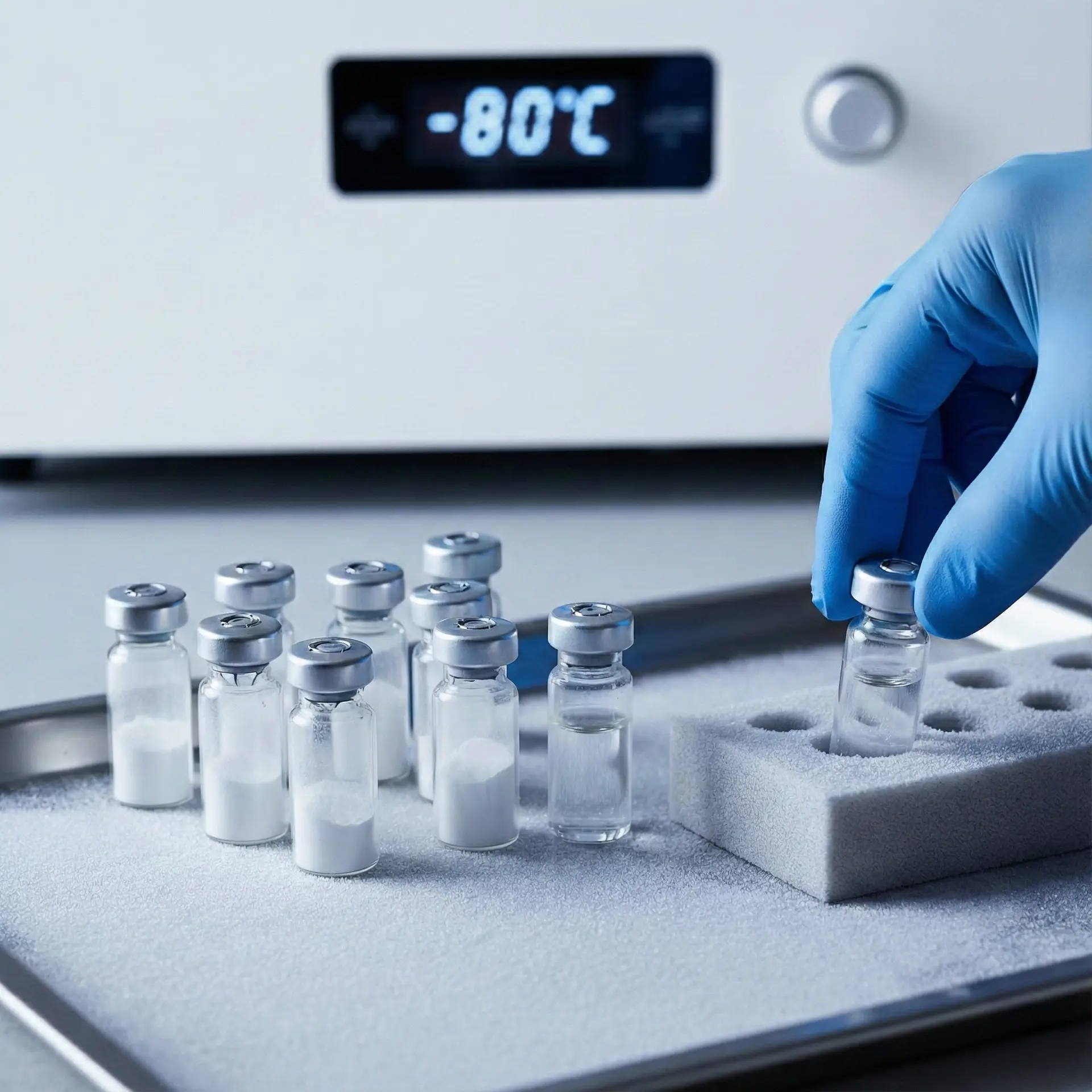
• Long-term (>1 month): –20°C (or –80°C for sensitive/long peptides).

• Short-term (<1 month): 4°C for unopened vials.

• Do NOT use frost-free freezers: they cycle temperature and destroy stability over weeks due to micro-thawing.

Humidity

• Store vials inside a secondary sealed container with silica desiccant.

• Warm-up rule: always allow the vial to reach room temperature before opening (~20 minutes).

Opening cold creates instant condensation → moisture → degradation.

Light

• Use amber vials or wrap clear vials in foil.

• Even room lights accelerate degradation of Trp-containing sequences.

Freezer Handling

• Avoid repeatedly opening the deep-freezer door.

• Keep vials in a cryo-box to buffer them from temperature swings.

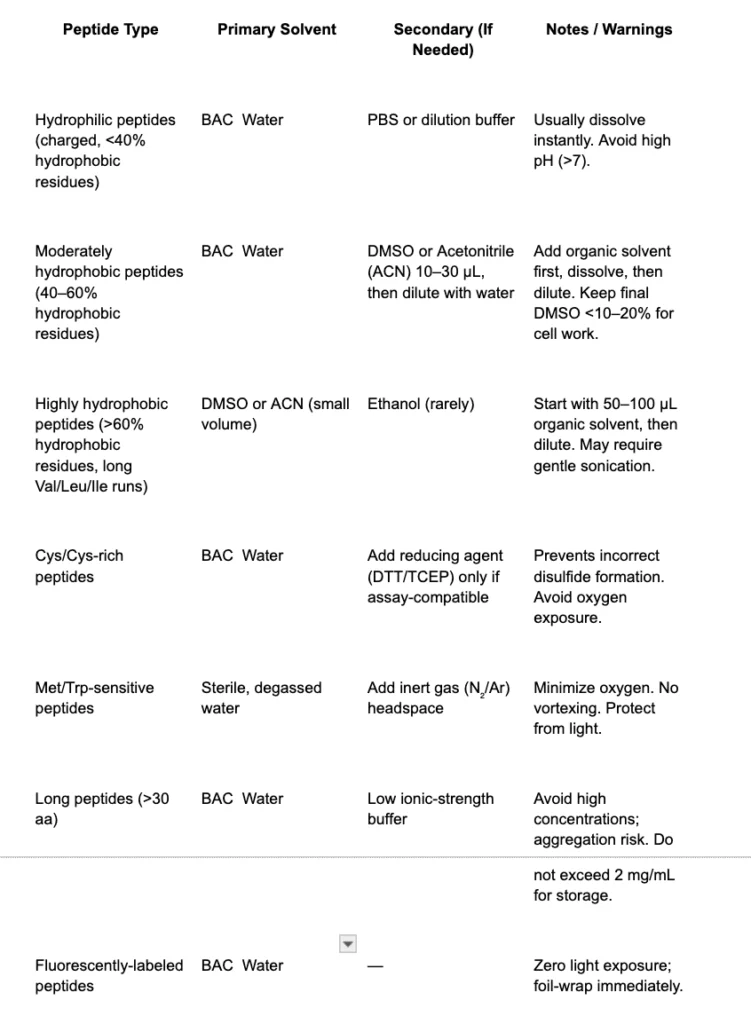
5. Solvent Selection & Reconstitution

Solvent choice dictates stability and solubility. Use the following order of operations.
6. Reconstitution SOP (Laboratory-Grade)

Step 1 – Equilibrate

Allow vial to reach room temperature.

Tap/centrifuge to settle powder at the bottom.

Step 2 — Add Solvent

Pipette solvent down the wall of the vial — not directly onto the powder.

Direct jetting causes localized supersaturation and irreversible aggregation.

Step 3 — Dissolve

No vortexing – Vortexing introduces air and shear forces, accelerating oxidation and aggregation.

Correct method:

• Gently swirl

• Tilt and roll

• Mild sonication (10–30 sec) if required

Step 4 — Inspect

Solution must be optically clear.

Cloudiness = precipitation or incomplete dissolution.

7. Freeze–Thaw Damage & How to Avoid It

Freezing creates ice crystal microstructures that mechanically stress peptides.

This is especially harmful for hydrophobic peptides and long sequences.

The Aliquot Rule

  1. Reconstitute the master vial.
  2. Immediately portion into single-use aliquots (0.1–1.0 mL).
  3. Freeze aliquots at –20°C or –80°C.
  4. Use one aliquot per experiment; never re-freeze.

Additional Notes

• Freeze rapidly, thaw slowly.

• For extremely sensitive peptides: flash-freeze in liquid nitrogen.

• Never freeze high-DMSO (>10%) solutions — mixed-phase freezing damages structure.

8. Special Handling Cases

Oxidation-Prone Sequences

Oxidation-Prone Sequences (Met, Cys, Trp, Tyr)

Use:

• Degassed water

• Inert gas flush (N₂/Ar) before sealing

• Amber vials or foil wrap

• Store at –80°C if long-term

Long Peptides (>30 aa)

These behave like mini-proteins:

• Prone to misfolding

• Aggregate at high concentrations

• Require lower storage concentration (≤2 mg/mL)

Hydrophobic Sequences

Hydrophobic peptides may “oil out” or adhere to glass.

Start with small-volume DMSO or ACN → dilute → sonicate as needed.

Fluorescent Peptides

Zero light exposure from moment of arrival.

9. Summary

Peptide stability is governed by three parameters:

  1. Temperature
  2. Moisture
  3. Molecular mobility.

By controlling these factors — and following proper reconstitution and aliquot protocols — researchers maintain experimental reproducibility and protect COA-verified purity.

10. Related Articles

Explore the rest of our other Pillar Pieces in our Research Hub:

  • What are Research Peptides? [LINK HERE]
    Learn what research peptides are under the FDA RUO framework, how they differ from GMP/clinical material, and what that means for legality, QC, and lab use.
  • How Are Peptides Made? [LINK HERE]
    Step-by-step guide to how peptides are made: SPPS, cleavage, HPLC purification, lyophilization, and QC so you can interpret COAs and compare RUO suppliers.
  • How to Read a Peptide COA? [LINK HERE]
    Learn how to read a peptide COA the right way—HPLC purity, MS identity, net peptide content, and digital verification—to separate real analytical data from marketing.
  • How to Select a Peptide Vendor [LINK HERE]
    Tips on how to select a peptide vendor: due diligence checklist for RUO peptides, transparency, COA quality, cold chain, pricing, and marketing red flags.

10. FAQs

Can I reconstitute with sterile water instead of BAC water?

Yes, if it is chemically sterile – distilled water is not a substitute. BAC water contains Benzyl Alcohol which prevents bacterial growth after reconstitution. However, the Benzyl Alcohol is a denaturant and may destabilize sensitive peptides. For these reasons, reconstituted peptides are recommended to be used 4-8 weeks after reconstitution, regardless of solvent.

My peptide arrived warm. Is it ruined?

No. Lyophilized peptides are stable at room temperature for weeks to months provided the seal is airtight

Why is there no expiration date on the vial?

RUO materials generally use retest dates, not expiration dates. A perfectly stored peptide will, theoretically, not degrade.

Can I refreeze a peptide solution?

No, unless flash frozen.

References

Bachem. “Care and Handling of Peptides.” 2021.

Merck KGaA. “Peptide Stability and Degradation Pathways.” 2025.

Sigma-Aldrich. “Solubility Guidelines for Hydrophobic Peptides.” 2024.

How to Select a Peptide Vendor

How to Select a Peptide Vendor

The Definitive Guide on Evaluating and Selecting a Research Peptides Vendor

Disclaimer: All information presented in this article is strictly for scientific, academic, and educational purposes. Research peptides discussed here are intended solely for laboratory research and in vitro studies. They are not approved by the FDA or any regulatory agency for human or veterinary use, clinical applications, therapeutic use, or consumption of any kind.

1. Introduction: Why Vendor Selection Defines Research Integrity

Selecting the right research peptide supplier is not merely a matter of convenience or cost—it is a cornerstone of scientific integrity. A peptide used in an experiment must be exactly what it claims to be: correct sequence, high purity, and free of contaminants. Otherwise, the resulting data becomes unreliable.

Irreproducible preclinical work drains billions of dollars and derails promising hypotheses. Poor-quality reagents are a documented contributing factor. Choosing a reputable Research Use Only (RUO) vendor ensures your experiments are built on validated reagents rather than guesswork.

Compliance also matters. A vendor that markets RUO peptides like lifestyle products is a liability: it risks supply continuity, creates institutional compliance exposure, and undermines the credibility of your Materials & Methods. This guide provides a rigorous framework to vet peptide vendors across three critical axes:

1. RUO Compliance

2. Data Integrity (COA, testing, traceability)

3. Logistics + Operational Quality (storage, cold chain, packaging).

2. The RUO Peptide Supply Chain Explained

To evaluate a vendor, you must understand the journey a peptide takes from synthesis to your freezer.

The Lifecycle of a Research Peptide

  1. Synthesis — Almost always via Solid-Phase Peptide Synthesis (SPPS).
  2. Purification — Typically reverse-phase HPLC to remove deletion sequences and byproducts.
  3. Lyophilization — Freeze-drying to stabilize the peptide.
  4. Logistics — Proper frozen storage and cold-chain shipping.

Transparent vendors will disclose where these steps occur and under what quality systems. RUO does not require full GMP certification, but high-end suppliers often operate under GMP-like or ISO-controlled processes because it improves consistency.

Chain-of-custody matters.

If a vendor bulk-imports peptides that sit in a warm warehouse for days or weeks before repackaging, purity and stability can measurably degrade.

Ask the vendor:

“Do you synthesize in-house or source from partners? How is the cold chain maintained during import and storage?”

3. Transparency as an Operational Signal

Transparency is not branding—it is an operational signal. Vendors who openly show sourcing, testing partners, and batch data rarely cut corners. In contrast, language like “Premium Grade” with no specifics is a red flag.

Key Indicators of Transparency

  • Business Legitimacy — Real physical address, responsive support, and technical contacts.
  • Source Disclosure — Country/region, facility type, and whether synthesis is in-house or outsourced.
  • Data Access — Batch-specific COAs readily available, not generic templates.
  • Composition Clarity — Clear statement of salt form (TFA vs acetate); RUO peptides should generally contain only peptide + counter-ion.

Gold-Standard Vendor Snapshot

A top-tier RUO peptide vendor will, without being asked:

  • Display strict RUO labeling everywhere.
  • Provide batch-specific COAs with HPLC chromatograms and MS mass confirmation.
  • Name the testing lab and its accreditation (e.g., ISO 17025).
  • Disclose manufacturing origin and quality standards.
  • Maintain frozen storage (-20°C) and fast fulfillment.

Answer technical questions about solubility, salt forms, and handling with precision.

4. Purity vs. Net Peptide Content: Reading Between the Lines

“99% purity” means very little unless you understand what was measured.

HPLC Purity vs Net Peptide Content

  • HPLC Purity — % of the target peptide peak relative to peptide-related impurities.
  • Net Peptide Content — % of total powder mass that is actual peptide vs. water, counter-ions, and residual reagents.

A peptide can be 99% pure but only 70–85% active peptide by weight.

What to Look For

  1. HPLC Data, Not Claims

    A purity % without chromatographic data or method parameters is not sufficient.
  2. Mass Spectrometry

    MS corroborates identity by matching observed and theoretical mass.

    Note: MS confirms molecular mass, not full amino-acid sequence or isobaric substitutions.
  3. Net Peptide Content (if available): For highly quantitative research, vendors should be transparent about whether content was measured (AAA, elemental analysis) or not.

5. RUO Compliance: The Marketing Red Flags

True RUO vendors sell reagents—not regimens.

A vendor can place “For Research Only” on a label yet still violate RUO requirements through its marketing.

Immediate Red Flags

  • Therapeutic or physiological claims (weight loss, muscle gain, injury recovery).
  • Dosing or injection instructions, even implied.
  • Selling clinical accessory items (syringes, bacteriostatic water).
  • Reviews describing physiological effects (“I lost 10 lbs”).
  • Consumer-facing lifestyle marketing on social media.

These behaviors attract regulatory scrutiny. If the vendor is shut down for misbranding or selling unapproved drugs, your supply continuity—and potentially your lab’s reputation—is at risk.

6. COA and Documentation Quality

The Certificate of Analysis is your batch’s proof of identity and purity.

If it’s generic, text-only, or reused, treat it as non-data.

A Legitimate COA Must Include:

  1. Lot/Batch Number linked to your vial
  2. Date of Analysis
  3. Testing Lab Identity (in-house or third-party, preferably ISO 17025 accredited)

Pro Tip:

A COA without any spectra, chromatograms, or mass data is a marketing placeholder until proven otherwise.

7. Infrastructure: Storage and Fulfillment

Peptides are chemically fragile. Temperature fluctuations, moisture, and oxygen alter their purity profile.

Vendor Infrastructure to Verify

  • Storage: −20°C or −80°C, not room temperature.
  • Inventory Turnover: COA analysis dates < 2 years, or evidence of re-verification.
  • Shipping: Insulated packaging with cold packs/dry ice depending on season
  • Packaging: Crimp-sealed vials (often under nitrogen) to avoid moisture ingress.

If the vendor cannot clearly articulate their cold-chain protocol, assume it does not exist.

8. Price vs. Quality: The “Too Good to Be True” Test

Synthesis, purification, and third-party QC are expensive.

Pricing that is dramatically below the market average is a diagnostic warning sign.

General Patterns

  • Low-End: Often skip purification or skip third-party testing.
  • High-End: Sometimes pay for branding rather than chemistry.
  • Sweet Spot: Transparent mid-range vendors who show full analytical data.

The cost of a failed experiment dwarfs the savings from a discounted peptide.

9. Evaluation Framework Checklist

Use this checklist to score vendors. Periodically re-evaluate vendors to ensure consistent adherence to these best practices.

Download our Vendor Audit Scorecard PDF [LINK]

10. Related Articles

Explore the rest of our other Pillar Pieces in our Research Hub:

  • What are Research Peptides? [LINK HERE]
    Learn what research peptides are under the FDA RUO framework, how they differ from GMP/clinical material, and what that means for legality, QC, and lab use.
  • How Are Peptides Made? [LINK HERE]
    Step-by-step guide to how peptides are made: SPPS, cleavage, HPLC purification, lyophilization, and QC so you can interpret COAs and compare RUO suppliers.
  • How to Read a Peptide COA? [LINK HERE]
    Learn how to read a peptide COA the right way—HPLC purity, MS identity, net peptide content, and digital verification—to separate real analytical data from marketing.

11. FAQs

How can I verify a COA is authentic?

Check for batch linkage, lab identity, and spectral data. You may contact the testing lab directly to confirm a report ID or lot number.

Are overseas vendors safe?

They can be if they follow good manufacturing practices and use fast cold-chain shipping. Domestic supplier usually reduce transit risk (2 days at room temp is less risky than 2 weeks at room temperature).

How do I switch vendors without disrupting research?

Run a pilot: purchase a small amount, test side-by-side with your previous supplier, then transition gradually.

References

FDA (2013). Distribution of In Vitro Diagnostic Products Labeled for Research Use Only.

de Marco, A. et al. (2021). Quality Control of Protein Reagents for the Improvement of Research Data Reproducibility. Nature Communications.

STAT News (2025). Inside the Peptide Craze: Hype, Science, and Risk.

Anderson, J.D. (2024). Certified Peptides: A Complete Scientific Guide. Peptide Systems Blog.

The Complete Guide to Research Peptides (RUO): Quality, Safety & Vendor Evaluation

The Complete Guide to Research Peptides (RUO)

A Comprehensive Reference for Researchers, Laboratories & Scientific Buyers

Disclaimer: All information presented in this article is strictly for scientific, academic, and educational purposes. Research peptides discussed here are intended solely for laboratory research and in vitro studies. They are not approved by the FDA or any regulatory agency for human or veterinary use, clinical applications, therapeutic use, or consumption of any kind.

0. How to Use This Guide

This guide is designed as the central knowledge hub for understanding, evaluating, and handling Research Use Only (RUO) peptides. It consolidates the scientific, regulatory, and operational considerations required to make informed decisions in a largely unregulated market.

Each section stands alone, but reading from start to finish provides a complete audit of the RUO peptide supply chain — from synthesis and analytical testing to storage, logistics, and vendor selection.

Throughout this guide, Honest Peptide is used as a model for best practices in transparency, third-party verification, and regulatory compliance.

1. What Are Research Peptides?

To evaluate a vendor, you must understand the journey a peptide takes from synthesis to Research peptides are short chains of amino acids (<50 residues) produced via Solid-Phase Peptide Synthesis (SPPS). They serve as reagents for biochemical, pharmacological, and structural research.

What defines them is not just their chemistry but their regulatory category:

Research Use Only (RUO) peptides:

✔ Laboratory reagents

✔ Intended for in vitro work or approved animal research

✔ Not validated for human administration

Not RUO:

✘ Dietary supplements

✘ Drugs

✘ Cosmetic actives

RUO peptides mimic naturally occurring biological molecules, but because they are not manufactured under pharmaceutical GMP, they cannot legally be sold, purchased, or used as drugs.

For a deeper explanation of how peptides are classified and used in laboratory settings, see our Deep Dive on “What Are Research Peptides?”.

2. RUO Classification & Compliance

RUO is a legal designation, not a marketing tag. The FDA explicitly states that RUO products must:

  • Be labeled “For Research Use Only”
  • Include no claims related to human safety or efficacy
  • Be sold as reagents, not consumer products

How to spot compliant vendors:

Compliant phrasing:

“This peptide has a molecular mass of 1234.6 Da.”

“Purified by HPLC to >98%.”

Red-flag phrasing:

“Burn fat quickly.”

“Anti-aging effects.”

“Dosing protocols.”

Vendors who cross into therapeutic language are misbranding unapproved drugs — a major regulatory trigger.

For a more detailed look on compliance, refer to the second half of our “What are Research Peptides”?”

3. Manufacturing: How Peptides Are Made

Most RUO peptides are manufactured using SPPS followed by purification and lyophilization. The purification step is what differentiates high-quality material from low-quality “crude” output.

Quality Levels

  1. Crude (<70%)
    • High error rate (deletion sequences)
    • Not appropriate for most research
  2. Research Grade (95–98%)
    • HPLC-purified
    • Sufficient for standard assays
  3. Premium Research Grade (>98%)
    • Multiple HPLC purification cycles
    • Required for quantitative assays
  4. GMP Grade
    • Extensive documentation
    • Required for clinical trials

Longer or hydrophobic peptides require additional purification cycles, increasing cost.

For a complete process breakdown, see our Deep Dive on Peptide Synthesis & Purification.

4. Analytical Testing: HPLC and Mass Spectrometry

You cannot determine chemical identity or purity by sight. Analytical testing is the backbone of peptide quality assurance.

1. HPLC — Purity

HPLC separates peptide-related impurities from the main sequence.

A valid purity specification includes:

  • A main peak representing ≥95–99% of total area
  • Minimal secondary peaks
  • Method parameters (column, gradient, detection wavelength)

2. Mass Spectrometry — Identity

HPLC cannot confirm the sequence. Only MS verifies identity by comparing:

  • Theoretical Mass (calculated from amino acid sequence)
  • Observed Mass (measured experimentally)

For catalog RUO peptides, MS data is a non-negotiable requirement for identity verification.

Exception:

Custom synthesis of novel, proprietary sequences may require different characterization — but this does not apply to standard catalog reagents like BPC-157, TB-500, GHK-Cu, etc.

For a deeper explanation on testing, refer to our “How to Read a Peptide COA” piece.

5. Certificates of Analysis (COAs)

A COA is the only objective proof of quality for your specific vial.

A valid COA includes:

ComponentRequirement
Batch / Lot NumberMust match your vial or packing slip
Analysis DateShould be recent (typically <24 months)
Purity %Derived from HPLC with supporting data
Mass VerificationObserved mass matches theoretical
Testing Lab InfoIdeally independent ISO-accredited

If a vendor uses generic COAs or “example documents,” assume the worst.

6. Third-Party Testing & Independent Verification

RUO peptides operate in a high-trust environment. Third-party testing removes the need to trust a vendor’s claims.

The Gold Standard

  • Testing performed by an independent ISO-17025 laboratory
  • COAs published with validation keys or URLs
  • Vendor does not edit or reformat data

Honest Peptide uses this standard for all catalog peptides. We disclose when a test is performed in-house vs independent, and we are progressively expanding MS data coverage to all products.

7. Evaluating a Peptide Vendor (Rapid Triage Checklist)

Use this triage filter to eliminate unreliable vendors in minutes.

Absolute requirements:

  • Batch-specific COA
  • HPLC + MS data for catalog peptides
  • Strict RUO labeling, no health claims
  • Transparent sourcing & testing partners
  • Physical address & responsive support
  • Frozen inventory & cold-chain fulfillment

If a vendor fails in any one of these areas, you should not use them for scientific research.

For an expanded due-diligence model, see How to Choose a Research Peptide Supplier.

8. Purity vs. Net Peptide Content

Many researchers misunderstand the difference between:

HPLC Purity

  • Percentage of peptide vs peptide-related impurities
  • Does not account for salts or water

Net Peptide Content

  • Percentage of total powder that is actual peptide
  • Accounts for bound water and counter-ions (e.g., acetate, TFA)

A vial labeled “1 mg” may contain:

  • 1 mg total mass (gross)
  • 0.7–0.8 mg actual peptide (net)

This is normal. It does not indicate contamination — it is chemical reality in lyophilized peptides.

9. Stability, Storage & Handling

Peptides degrade through oxidation, hydrolysis, deamidation, and aggregation. Proper handling dramatically reduces this.

Storage Rules

Lyophilized:

  • Stable at room temperature during shipping
  • Store at –20°C for long-term
  • Keep in dry, dark containers

Reconstituted:

  • Stable for days–weeks at 4°C
  • Avoid freeze-thaw cycles
  • Always aliquot

Critical Practices

  • Never open a cold vial (condensation risk)
  • Avoid frost-free freezers
  • Do not vortex
  • Protect light-sensitive sequences

For full protocols, see Peptide Storage & Handling Best Practices.

10. Safety Considerations (RUO)

RUO peptides must be handled as potent biochemical reagents:

  • Wear PPE
  • Avoid aerosolizing powders
  • Dispose through approved chemical channels
  • Never use RUO peptides in humans
  • For animal research, follow IACUC-approved protocols

11. Glossary of Key Terms

  • Lyophilization: Freeze-drying for stability
  • Counter-ion: Stabilizing salt bound to peptide
  • Aliquot: Dividing a solution for storage
  • HPLC: Method measuring chemical purity
  • MS: Method confirming molecular mass
  • Net Peptide Content: % peptide vs salts/water

12. FAQs

Are RUO peptides legal?

Yes — when sold and used strictly for laboratory research.

Why is the vial almost empty?

Because 1 mg of peptide is often a thin film that looks like dust.

Why no expiration date?

RUO peptides typically carry a “retest date” rather than a true expiry.

References

  1. FDA. Distribution of In Vitro Diagnostic Products Labeled for Research Use Only or Investigational Use Only. 2013.
  2. USP. General Chapter <1041> Biologics. U.S. Pharmacopeia.
  3. Merck KGaA / Sigma-Aldrich. Handling and Storage Guidelines for Peptides. 2024.
  4. Bachem AG. Peptide Stability and Storage Guidelines. 2021.
  5. de Marco, A., et al. “Quality Control of Protein Reagents for the Improvement of Research Data Reproducibility.” Nature Communications (2021).
  6. Anderson, J. D. “Certified Peptides: A Complete Scientific Guide to Authentic, Verified Research-Grade Peptides.” Peptide Systems Blog, 2024.
  7. STAT News. “Inside the Peptide Craze: Hype, Science, and Risk.” 2025.

Sermorelin vs. Ipamorelin vs. Tesamorelin

A Research Comparison

Disclaimer: For research use only, not for human use. All comparisons are based on published research data.

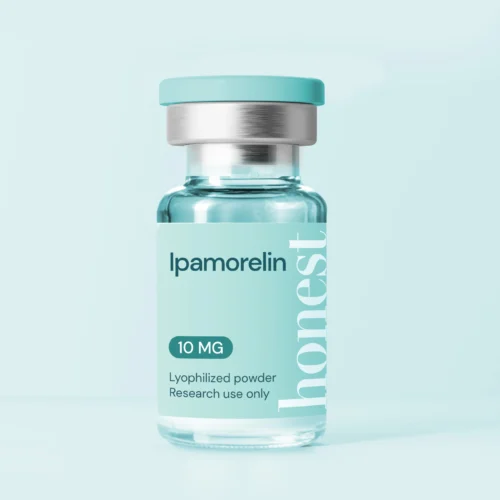
Ipamorelin 10mg

Original price was: $70.00.Current price is: $49.00.

In stock

SKU: IP10

Introduction

Sermorelin, Ipamorelin, and Tesamorelin are three distinct peptides studied for their ability to influence the growth hormone (GH) axis — but they act at different points in the pathway and have different structural characteristics.¹²³ This comparison outlines their molecular differences, mechanisms, and research uses.

At a Glance: Key Differences

Insert Figure 1: Side-by-side comparison table of Sermorelin, Ipamorelin, and Tesamorelin.
ALT: “Table comparing Sermorelin, Ipamorelin, and Tesamorelin on structure, mechanism, and research uses.”
Caption: “Figure 1. Summary of differences between Sermorelin, Ipamorelin, and Tesamorelin in research contexts.”

FeatureSermorelinIpamorelinTesamorelin
TypeSynthetic GHRH analog (1–29 aa)Growth hormone secretagogue (GHS) pentapeptideModified GHRH analog
Primary TargetGHRH receptor (pituitary)Ghrelin receptor (GHS-R1a)GHRH receptor (pituitary)
Main EffectPulsatile GH release via GHRH axisGH release without cortisol or prolactin spikesGH release, reduced visceral adipose tissue
Half-Life~10–20 min~2 hours~30 min
Notable Study AreaDiagnostic GH testing, aging modelsMuscle and tendon recovery, anti-catabolic researchHIV-associated lipodystrophy, metabolic research

Mechanism of Action Differences

Sermorelin

  • Mimics endogenous GHRH to trigger physiologic GH pulses.š
  • Preserves negative feedback loops via somatostatin.

Ipamorelin

  • Selectively activates ghrelin receptors, stimulating GH release without significant effect on other pituitary hormones.²
  • Often studied alongside CJC-1295 for combined effects.

Tesamorelin

  • Modified GHRH analog designed for enhanced stability.Âł
  • In research, reduces visceral adipose tissue while increasing GH and IGF-1.

Research Use Focus Areas

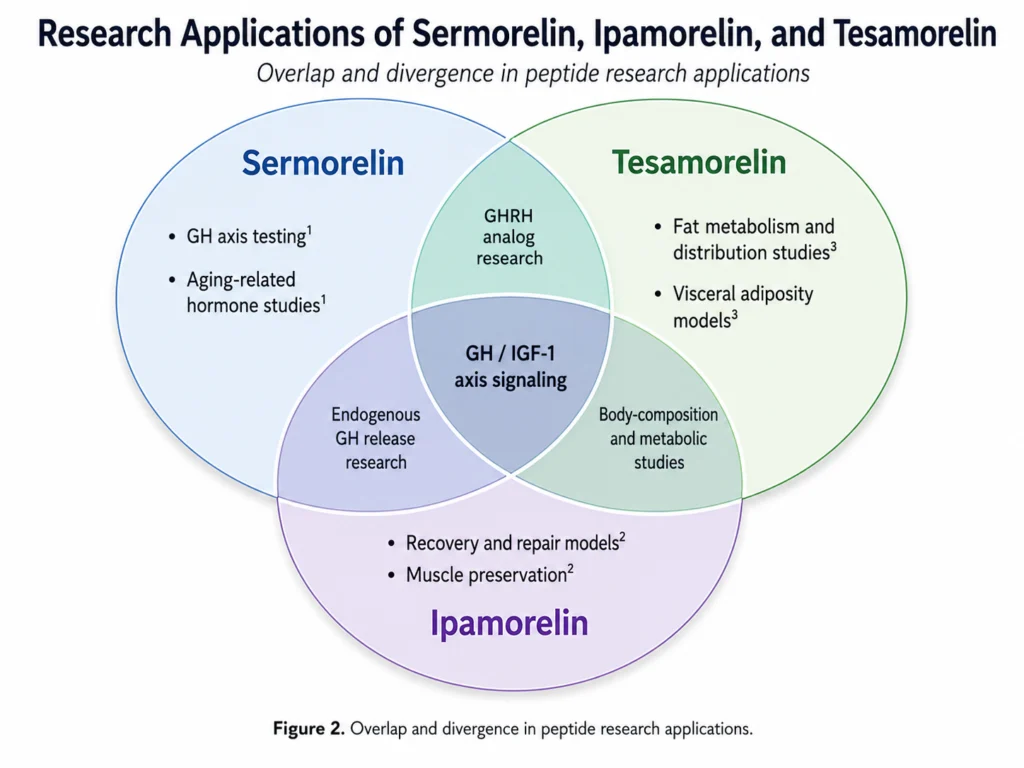
Venn diagram comparing research applications of Sermorelin, Ipamorelin, and Tesamorelin
Figure 2. Overlap and divergence in peptide research applications


ALT: “Venn diagram comparing research applications of Sermorelin, Ipamorelin, and Tesamorelin.”

  • Sermorelin: GH axis testing, aging-related hormone studies.š
  • Ipamorelin: Recovery and repair models, muscle preservation.²
  • Tesamorelin: Fat metabolism and distribution studies, particularly in visceral adiposity models.Âł

Summary

While all three peptides interact with the GH axis, Sermorelin acts through GHRH receptors to produce natural GH pulses, Ipamorelin works via ghrelin receptors with high selectivity, and Tesamorelin is a stabilized GHRH analog often studied for metabolic effects. Choice of peptide in research depends on the target pathway and study goals.

FAQs

What is the difference between Sermorelin and Ipamorelin?

Sermorelin is a synthetic GHRH analog that stimulates physiologic GH pulses via the pituitary, while Ipamorelin is a selective ghrelin receptor agonist that triggers GH release without affecting other pituitary hormones.

How does Tesamorelin differ from Sermorelin?

Tesamorelin is a stabilized GHRH analog with a longer half-life, often studied for its effects on visceral fat reduction, whereas Sermorelin is primarily used for GH axis stimulation and testing.

Can these peptides be used together in research?

Some research protocols combine GH axis–modulating peptides, but study design depends on specific goals and pathway targets.

Related Pages

References

  1. Thorner MO, et al. Sermorelin: a growth hormone–releasing hormone analog. J Clin Endocrinol Metab. 1986;62(4):648–653. https://pubmed.ncbi.nlm.nih.gov/3004674/
  2. Svensson J, et al. Ipamorelin, a new growth hormone releasing peptide in humans. J Clin Endocrinol Metab. 2000;85(1): 282–288. https://pubmed.ncbi.nlm.nih.gov/10634381/
  3. Falutz J, et al. Effects of tesamorelin, a growth hormone–releasing factor analog, in HIV patients with abdominal fat accumulation. N Engl J Med. 2007;357(23):2359–2370. https://pubmed.ncbi.nlm.nih.gov/18057337/

NAD⁺ vs. Precursors: NMN vs. NR Comparison

Introduction

What’s the difference between NAD⁺, NMN, and NR? In the world of anti-aging and cellular health, NAD⁺ precursors—especially nicotinamide mononucleotide (NMN) and nicotinamide riboside (NR)—are among the most researched compounds. This article compares these molecules in terms of bioavailability, research evidence, dosing, safety, and practical use.¹²³

Disclaimer: This content is for research and educational use. NAD⁺, NMN, and NR are not FDA-approved for disease treatment.

Comparison Table: NAD⁺, NMN, NR

CompoundStructure/SourceBioavailabilityConversion to NAD⁺Research UseTypical DosingSafety ProfileSupplement Status
NAD⁺Core coenzyme, not orally stablePoor orallyN/A (already NAD⁺)IV/injection in trials250–1,000 mg IVGood in short trialsIV clinics, research
NMNB3 derivative, found in broccoli, avocadosGood orallyDirectly to NAD⁺ (via NR)Anti-aging, metabolic100–1,250 mg/daySafe up to 1,250 mg/dayWidely available
NRB3 derivative, in milk, yeast, beerGood orallyDirect to NAD⁺Anti-aging, metabolic100–2,000 mg/daySafe up to 2,000 mg/dayWidely available

NMN vs. NR: Key Differences

1. Absorption and Conversion

  • NR: Absorbed and converted to NMN, then NAD⁺ in cells.
  • NMN: Can be absorbed directly and converted to NAD⁺, though some evidence suggests it may be dephosphorylated to NR first in the gut.
    Bottom line: Both boost NAD⁺, but minor differences in their absorption and metabolism are under active research.š²³

2. Research Evidence

  • NR: Backed by several human trials showing safety and elevated NAD⁺ at doses up to 2,000 mg/day.Âł
  • NMN: Also supported by human and animal studies, with benefits on metabolic health, aging, and exercise; safe up to 1,250 mg/day.²
    Both show promise for anti-aging and energy, but human head-to-head data are limited.

3. Cost and Supplement Status

  • NR: Used in patented supplements (e.g., Niagen), generally more expensive.
  • NMN: Often less expensive and more widely available, but patent/legal status varies by country.

4. Dosing and Safety

  • Both compounds are well tolerated in human trials at standard research doses for 4–12 weeks. Mild GI symptoms are the most common side effects.

When to Use Each Precursor?

  • NMN may be preferred by those seeking direct NAD⁺ elevation, with supportive research for aging and metabolic health.
  • NR may be chosen for patented, clinical-grade supplements with robust safety data.

Direct NAD⁺ supplementation (IV, subcutaneous) is primarily experimental/research and not practical or necessary for most users.

FAQs

Which is better: NMN or NR?

Both NMN and NR reliably boost NAD⁺ in cells. NR has more human clinical data, while NMN has robust animal and early human evidence. No clear winner—choice may depend on availability, price, and individual response.

Can you take NMN and NR together?

Some researchers and supplement users combine both, but there’s no published evidence showing added benefit or risk from dual supplementation.

Is direct NAD⁺ (IV/injection) better than NMN or NR?

Direct NAD⁺ infusion raises blood NAD⁺ but is experimental, costly, and not widely recommended outside clinical trials. Oral NMN/NR is more practical and safe for most uses.

Which is better for anti-aging or energy?

Both NMN and NR support mitochondrial health and sirtuin activation; early evidence is positive for each, but more direct comparative studies are needed.

Related Articles

References

  1. Covarrubias AJ, Perrone R, Grozio A, Verdin E. NAD⁺ metabolism and its roles in cellular processes during ageing. Nat Rev Mol Cell Biol. 2021;22(2):119–141. https://pubmed.ncbi.nlm.nih.gov/33230262/
  2. Mills KF, Yoshida S, Stein LR, et al. Long-term administration of nicotinamide mononucleotide mitigates age-associated physiological decline in mice. Cell Metab. 2016;24(6):795–806. https://pubmed.ncbi.nlm.nih.gov/28068222/
  3. Trammell SAJ, Schmidt MS, Weidemann BJ, et al. Nicotinamide riboside is uniquely and orally bioavailable in mice and humans. Nat Commun. 2016;7:12948. https://www.nature.com/articles/ncomms12948

Benefits of Melanotan-II (MT-2)

What Research Shows

Introduction:

Melanotan II (Melanotan 2, MT-II) is a synthetic peptide that mimics the effects of ι-melanocyte-stimulating hormone (ι-MSH). Research has focused on its ability to stimulate pigmentation, but studies also suggest roles in sexual function and metabolic regulation.š² While not FDA-approved, Melanotan II remains a widely studied research compound.

Key Benefits Reported in Research

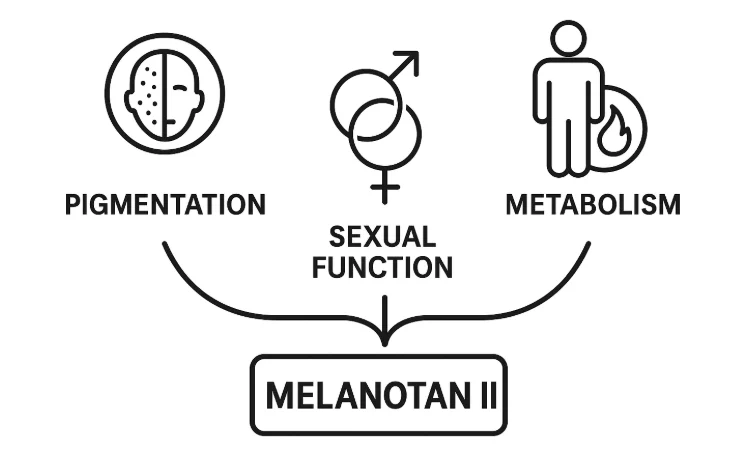
Diagram of Melanotan II benefits: tanning, sexual function, metabolism
 Melanotan II has been researched for pigmentation, sexual function, and metabolic effects

1. Skin Pigmentation & Tanning

  • Melanotan II stimulates MC1R receptors in melanocytes, leading to increased melanin production.š
  • Research shows this results in darker skin pigmentation, which has been investigated for treating conditions like vitiligo and photosensitivity disorders.Âł
  • Why it matters: Increased melanin may help protect against UV-induced DNA damage and sunburn.

2. Sexual Function

  • Clinical trials found that Melanotan II can improve erectile function in men with erectile dysfunction.²
  • It has also been studied in female sexual arousal disorder with reported increases in desire and physiological response.²
  • Why it matters: These effects stem from MC4R receptor activity in the central nervous system, opening pathways for research in sexual health.

3. Appetite & Metabolic Effects

  • By acting on MC3R/MC4R receptors in the brain, Melanotan II reduces food intake in animal and early human studies.⁴
  • Findings suggest potential roles in obesity research through appetite suppression and improved metabolic parameters.
  • Why it matters: While experimental, these effects align with broader research into melanocortin pathways for weight regulation.

Summary

Melanotan II (Melanotan 2) has been studied for three main benefits:

  1. Pigmentation/tanning — by increasing melanin production.
  2. Sexual function — through MC4R activation in the brain.
  3. Metabolism — via appetite suppression and energy balance regulation.

Despite these findings, Melanotan II is not FDA-approved and should be regarded as a research-only peptide.

FAQs About Melanotan II Benefits

What is the main benefit of Melanotan II?

 Its primary studied benefit is increased skin pigmentation through melanin production.

Does Melanotan II help with weight loss?

 It reduces appetite in some studies, but research remains experimental.

Can Melanotan II improve sexual function?

  Yes, clinical trials found improvements in erectile dysfunction and female arousal disorder.

Is Melanotan II approved for tanning or cosmetic use?

 No, it is not FDA-approved for any use.

Related Articles

References

  1. Abdel-Malek Z, et al. “Melanocortin receptors and human pigmentation.” Pigment Cell Res. 2001;14(3):153–160. https://pubmed.ncbi.nlm.nih.gov/11434561/
  2. Wessells H, et al. “Effect of melanocortin receptor agonist Melanotan-II in men with erectile dysfunction: a randomized controlled trial.” Arch Neurol. 2000;57(4):449–455. https://pubmed.ncbi.nlm.nih.gov/10768691/
  3. Böhm M, et al. “Melanocortin receptor ligands: new horizons for skin biology and clinical dermatology.” J Invest Dermatol. 2006;126(9):1966–1975. https://pubmed.ncbi.nlm.nih.gov/16912692/
  4. Kievit P, et al. “Chronic treatment with a melanocortin-4 receptor agonist causes weight loss and improves insulin sensitivity in diet-induced obese monkeys.” J Clin Endocrinol Metab. 2013;98(2):E291–E300. https://pubmed.ncbi.nlm.nih.gov/23275596/

Benefits of MOTS-C

What Research Shows

Introduction:

MOTS-C is a mitochondrial-derived peptide (MDP) that plays a unique role in regulating metabolism, energy balance, and stress responses.š² Preclinical research and early human studies suggest that MOTS-C may have potential benefits across metabolic health, exercise performance, and healthy aging.

This article reviews the most studied and promising benefits of MOTS-C.

1. Improved Metabolic Health

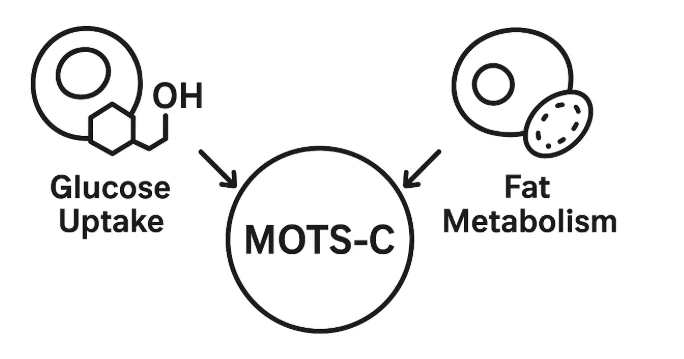
Diagram showing MOTS-C effects on metabolism and insulin sensitivity
MOTS-C improves glucose utilization and fatty acid oxidation in preclinical models
  • Enhances glucose uptake by increasing GLUT4 transporters in muscle cells.š
  • Improves insulin sensitivity, counteracting resistance seen in obesity and type 2 diabetes.š²
  • Reduces fat accumulation through increased fatty acid oxidation.²
  • Why it matters: Positions MOTS-C as a research candidate for obesity, diabetes, and metabolic syndrome.

2. Exercise Performance & Endurance

  • MOTS-C levels rise naturally during physical activity.²
  • Supports mitochondrial function and energy metabolism during exercise.Âł
  • In mouse models, supplementation improved endurance and delayed fatigue.²
  • Why it matters: MOTS-C is sometimes referred to as an “exercise-mimicking peptide”, highlighting its role in physical performance.

3. Healthy Aging & Longevity

  • MOTS-C levels decline with age, correlating with reduced metabolic flexibility.Âł
  • Animal studies showed MOTS-C extended healthspan and lifespan, improving markers of physical and metabolic aging.⁴
  • Early research suggests MOTS-C could buffer age-related decline in humans.⁾
  • Why it matters: Makes MOTS-C a promising focus for longevity and geroscience research

4. Stress Resistance & Adaptation

  • MOTS-C helps cells adapt to metabolic stress (nutrient deprivation, exercise).²
  • Boosts resilience by enhancing mitochondrial efficiency.Âł
  • Why it matters: Supports the idea that MOTS-C acts as a stress-response peptide, helping organisms maintain balance in challenging conditions

Summary

MOTS-C has been linked to better glucose regulation, enhanced endurance, stress resilience, and longevity effects in animal and early human research. While human clinical trials remain limited, these findings make MOTS-C one of the most promising mitochondrial-derived peptides in modern research.

FAQs About MOTS-C Benefits

Does MOTS-C improve weight loss?

 In animal studies, MOTS-C reduced fat mass and improved insulin sensitivity, but human results are preliminary.

Can MOTS-C improve exercise endurance?

 Yes, studies show increased endurance and delayed fatigue in animal and early human research.

Is MOTS-C an anti-aging peptide?

 It may play a role in aging research, but human clinical evidence is still limited.

Are the benefits proven in humans?

 Most benefits are based on animal and preclinical data; large human trials are still needed.

Related Articles

References

  1. Lee C, et al. “The mitochondrial-derived peptide MOTS-c promotes metabolic homeostasis and reduces obesity and insulin resistance.” Cell Metab. 2015;21(3):443–454. https://pubmed.ncbi.nlm.nih.gov/25738459/
  2. Reynolds JC, et al. “MOTS-c is an exercise-induced mitochondrial-encoded regulator of age-dependent physical decline.” Nat Commun. 2021;12:470. https://pubmed.ncbi.nlm.nih.gov/33563973/
  3. Zarse K, Ristow M. “Mitochondrial peptides and aging: a new perspective.” Exp Gerontol. 2020;130:110791. https://pubmed.ncbi.nlm.nih.gov/31731158/
  4. Lu H, et al. “Mitochondrial-derived peptide MOTS-c increases healthspan and lifespan in mice.” Aging Cell. 2019;18(6):e13030. https://pubmed.ncbi.nlm.nih.gov/31608986/
  5. Quevedo H, et al. “MOTS-c clinical potential in metabolic disease and aging.” Front Endocrinol. 2022;13:890123. https://pubmed.ncbi.nlm.nih.gov/35669234/

AOD-9604 Benefits

What Research Shows

Introduction:

AOD-9604 is a synthetic peptide fragment of human growth hormone (HGH), designed to selectively target fat metabolism without stimulating growth pathways.š While initially developed for obesity research, studies have also suggested potential benefits for metabolism, lipid balance, and cartilage protection.

Because AOD-9604 remains an experimental peptide, all reported benefits are based on preclinical models and early clinical work, not established medical evidence.

Potential Benefits of AOD-9604

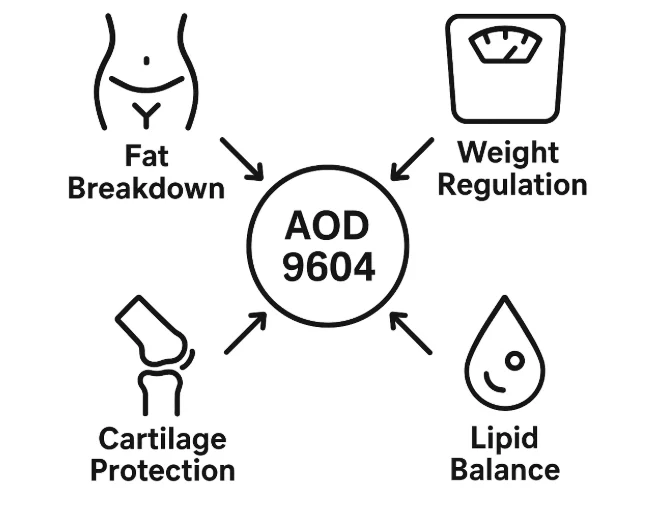
AOD-9604 has been studied for fat metabolism, weight regulation, and cartilage protection.

1. Fat Breakdown (Lipolysis)

  • AOD-9604 promotes the breakdown of stored triglycerides into free fatty acids.š
  • This effect has been observed in adipose tissue from both lean and obese models.

Key takeaway: May support the mobilization of stored fat for energy.

2. Reduced Fat Storage (Anti-Lipogenesis)

  • Research shows AOD-9604 can inhibit the formation of new fat from dietary carbohydrates.²
  • In obese rodent models, this led to less weight gain even under high-calorie diets.

 Key takeaway: Suggests potential use in preventing fat accumulation.

3. Weight Regulation

  • In animal studies, AOD-9604 reduced body fat mass and improved metabolic parameters.²
  • Early human trials showed limited direct weight loss, but trends toward improved lipid metabolism.Âł

Key takeaway: May influence weight management indirectly by altering fat metabolism.

4. Lipid Profile & Metabolic Health

  • Some research reports improved lipid balance (e.g., triglyceride reduction) in preclinical studies.²
  • Possible improvements in basal metabolic rate have also been noted.

Key takeaway: Beyond fat burning, AOD-9604 may have broader metabolic effects.

5. Cartilage & Joint Protection

Because DSIP is often studied for sleep regulation, it is natural to compare it with melatonin, the most widely used sleep supplement:

  • AOD-9604 demonstrated chondroprotective effects in models of cartilage degradation.⁴
  • May reduce proteoglycan loss and support collagen maintenance.

Key takeaway: Suggests possible relevance for joint and connective tissue research.

Limitations of Evidence

  • Animal-dominant data: Most findings are from rodent and cell models.
  • Human trials limited: Clinical data shows modest or inconsistent results.Âł
  • Unclear mechanisms in humans: Translation from animals to people remains uncertain.

Summary

Research into AOD-9604 suggests potential benefits for:

  • Fat breakdown (lipolysis)
  • Reduced fat storage (anti-lipogenesis)
  • Weight regulation
  • Improved lipid profile
  • Cartilage protection

However, AOD-9604 remains an experimental peptide, with human results still inconclusive.died but potentially broader in scope, influencing multiple systems beyond sleep.

FAQs About AOD-9604 Benefits

What is the main benefit of AOD-9604?

 Research suggests its primary effect is fat metabolism — stimulating fat breakdown and reducing fat storage.

Can AOD-9604 help with weight loss?

  Animal studies show fat loss effects, but human results have been mixed.

Does AOD-9604 support joint health?

 Some early research suggests cartilage-protective effects.

Is AOD-9604 approved for obesity treatment?

 No — AOD-9604 is not FDA-approved and remains a research-only peptide.

References

  1. Heffernan M, et al. “AOD9604, a novel fragment of human growth hormone, stimulates lipolysis in adipose tissue.” J Endocrinol. 2001;170(3):433–442. https://pubmed.ncbi.nlm.nih.gov/11479127/
  2. Ng FM, et al. “Metabolic effects of a growth hormone fragment (AOD9604) in obese Zucker rats.” Obes Res. 2000;8(6):479–486. https://pubmed.ncbi.nlm.nih.gov/11156424/
  3. Ng FM, et al. “AOD9604, an analog of hGH fragment 177–191, reduces body weight in obese mice but not obese humans.” Int J Obes Relat Metab Disord. 2002;26(2):191–197. https://pubmed.ncbi.nlm.nih.gov/11850748/
  4. Ng FM, et al. “Chondroprotective potential of AOD9604 in cartilage degradation models.” Arthritis Res Ther. 2004;6(6):R713–R722. https://pubmed.ncbi.nlm.nih.gov/15535832/

AOD-9604 Side Effects & Safety

Introduction

AOD-9604 is a synthetic peptide fragment of human growth hormone (HGH) developed for research into fat metabolism. While studies suggest it may influence lipolysis and fat storage, its safety profile is not fully understood.š²

This article reviews what research has reported about AOD-9604’s side effects and potential safety concerns.

Reported Side Effects of AOD-9604

Infographic showing reported side effects of AOD-9604.
Figure 1. Reported side effects of AOD-9604 are limited and mostly mild.

1. Mild Adverse Events

  • Early clinical trials in obese humans reported mild gastrointestinal discomfort (nausea, bloating).Âł
  • Some participants reported headaches and fatigue, but at rates comparable to placebo.Âł

2. Injection Site Reactions

  • As with many subcutaneous peptides, minor redness, swelling, or irritation at injection sites has been reported.²
  • Typically mild and transient.

3. Lack of Significant Weight Loss

While not a direct “side effect,” human trials showed minimal efficacy for weight loss, which limited its clinical development.³


Safety Profile in Research

1. No IGF-1 Stimulation

  • AOD-9604 does not increase IGF-1, avoiding many of the growth-related risks associated with HGH.š
  • Suggests a safer metabolic profile compared to growth hormone therapy.

2. Toxicity Findings

  • Animal studies have not shown dose-dependent toxicity at tested ranges.²
  • Safety margins appear broad, but data is limited.

3. Human Clinical Trial Results

  • In obese human subjects, no serious adverse events were attributed to AOD-9604.Âł

Side effects were generally mild and similar to placebo.

Key Limitations

  • Limited human data: Only small-scale obesity trials exist.
  • Short study duration: Most studies lasted weeks to months; long-term safety unknown.
  • Unregulated use: Since AOD-9604 is not FDA-approved, quality and purity vary widely outside controlled research.

Summary

AOD-9604 appears to have a generally mild side effect profile in the limited research conducted, with most reported effects being:

  • Gastrointestinal discomfort
  • Headaches or fatigue
  • Injection site reactions

However, because human evidence is limited and long-term safety has not been studied, AOD-9604 remains restricted to research use only.

FAQs About AOD-9604 Side Effects

What are the most common side effects of AOD-9604?

Mild GI issues, headaches, and injection site redness have been reported.

Does AOD-9604 increase IGF-1 like HGH?

No — studies show AOD-9604 does not stimulate IGF-1.

Is AOD-9604 considered safe?

Animal and early human data suggest a mild safety profile, but research is limited and long-term effects are unknown.

Have serious side effects been reported?

No serious adverse events have been linked to AOD-9604 in studies.

References

  1. Heffernan M, et al. “AOD9604, a novel fragment of human growth hormone, stimulates lipolysis in adipose tissue.” J Endocrinol. 2001;170(3):433–442. https://pubmed.ncbi.nlm.nih.gov/11479127/
  2. Ng FM, et al. “Metabolic effects of a growth hormone fragment (AOD9604) in obese Zucker rats.” Obes Res. 2000;8(6):479–486. https://pubmed.ncbi.nlm.nih.gov/11156424/
  3. Ng FM, et al. “AOD9604, an analog of hGH fragment 177–191, reduces body weight in obese mice but not obese humans.” Int J Obes Relat Metab Disord. 2002;26(2):191–197. https://pubmed.ncbi.nlm.nih.gov/11850748/

TB-500 Side Effects & Safety: What the Research Says

What the Research Says

Introduction:

What are the side effects and safety concerns of TB-500?
TB-500, a synthetic peptide fragment of thymosin β4, is used in research settings for its effects on tissue repair and recovery. While its benefits are well-documented in animal models, its safety and potential side effects—especially in humans—remain less clear.

Disclaimer: TB-500 is for laboratory research use only. It is not approved for human use, and all data discussed here comes from preclinical or investigational studies.

Known & Potential Side Effects

Summary Table: TB-500 Side Effects & Safety Data

Reported/Potential EffectEvidence LevelStudy TypeNotes
Injection site irritationšAnecdotalHuman (self-report)Redness, minor pain
Headache, fatigue, mild nauseašAnecdotalHuman (self-report)Uncommon, usually mild
Immune modulation²³PreclinicalAnimalNo major immune suppression noted
Organ toxicity⁴⁾PreclinicalAnimalNot observed at standard doses
Carcinogenicity⁜PreclinicalAnimal, CellNo evidence of tumor promotion
Allergic reactionsAnecdotalHuman (self-report)Extremely rare
Long-term effectsUnknownN/ANo long-term human data available

References for Table

1.User anecdotal reports on peptide forums (no peer-reviewed clinical trials)

2.Goldstein AL et al. Mol Biol Cell. 1992;3(9):1015–1024.

3.Sosne G et al. Ann N Y Acad Sci. 2007;1112:232–240.

4.Bock-Marquette I et al. J Biol Chem. 2010;285(51):39345–39354.

5.Stewart DJ et al. Circ Res. 2012;111(7):940–950.

6.Fan J et al. Front Endocrinol (Lausanne). 2021;12:767785.

TB-500 side effect categories: local, systemic, immune, unknown.
Figure 1. Known and potential TB-500 side effect categories in research.

Preclinical Safety & Toxicology

  • Animal studies: TB-500 has been tested at a range of doses (2–10 mg/kg daily), with no evidence of organ toxicity, immune suppression, or carcinogenicity at these levels²⁴.
  • High-dose testing: Studies using higher-than-research doses still did not reveal acute toxicity or significant adverse effects⁴⁾.
  • Immune effects: Most preclinical research finds no major effect on white blood cell counts, antibody response, or overall immune system function²³.
  • Tumor risk: No preclinical evidence suggests TB-500 increases cancer risk or accelerates tumor growth⁜.

Human Data: Clinical Trials & Anecdotes

  • Clinical trial data: Most human safety data comes from studies of full-length thymosin β4, not TB-500 itself. These studies (for wound and eye healing) reported no significant adverse effects at tested dosesÂł.
  • Anecdotal reports: Minor injection site reactions (redness, pain) and occasional headache or nausea are the most commonly reported side effects on peptide forums. These are not validated by clinical research.
  • Long-term effects: There are currently no published studies evaluating long-term, high-dose, or chronic use of TB-500 in humans.

Uncertainties, Compliance, & Best Practices?

  • For research use only: TB-500 is not FDA-approved for any therapeutic purpose.
  • Limitations: Most side effect data comes from animal studies and user anecdotes, not controlled human trials.
  • Best research practices:
    • Use the lowest effective dose
    • Monitor for unexpected reactions
    • Record all adverse events, even if mild
    • Strictly label all materials as “research use only”

Frequently Asked Questions (FAQs)

What are the most common side effects of TB-500?

Minor injection site irritation is the most frequently reported, along with rare cases of headache or nausea (mostly from anecdotal user reports).

Is TB-500 safe in animal studies?

At typical research doses, animal studies have found no evidence of acute or chronic toxicity, organ damage, or tumor formation.

Are there any known risks of long-term TB-500 use?

There are no published studies on long-term human use; safety beyond short-term, low-dose research is unknown.

Is TB-500 immunosuppressive?

Preclinical data does not show significant immune suppression at research doses.

Can TB-500 cause cancer?

No evidence exists in preclinical studies that TB-500 increases cancer risk.

Related Articles

References

  1. User anecdotal reports on peptide forums (not peer-reviewed).
  2. Goldstein AL, Hannappel E, Sosne G. Thymosin β4: actin-sequestering protein regulates cell migration and wound healing. Mol Biol Cell. 1992;3(9):1015–1024. https://www.ncbi.nlm.nih.gov/pmc/articles/PMC275662/
  3. Sosne G, Wheeler LA, Zijah SS, et al. Thymosin β4: a novel corneal wound-healing and anti-inflammatory agent. Ann N Y Acad Sci. 2007;1112:232–240. https://pubmed.ncbi.nlm.nih.gov/17947584/
  4. Bock-Marquette I, Saxena A, White MD, et al. Thymosin β4 activates integrin-linked kinase and promotes cardiac cell migration, survival, and repair. J Biol Chem. 2010;285(51):39345–39354. https://pubmed.ncbi.nlm.nih.gov/20691219/
  5. Stewart DJ, Wei CC, Pabon M, et al. Thymosin β4 confers long-term survival benefit in a murine model of acute myocardial infarction. Circ Res. 2012;111(7):940–950. https://doi.org/10.1161/CIRCRESAHA.112.268680
  6. Fan J, Xu G, Jiang T, et al. Anti-fibrotic and anti-inflammatory effects of Thymosin β4 in organ injury models. Front Endocrinol (Lausanne). 2021;12:767785. https://www.frontiersin.org/articles/10.3389/fendo.2021.767785/full