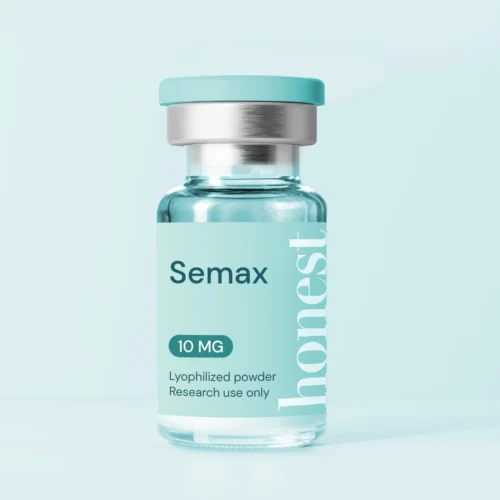
Semax Dosage Calculator
This Semax dosage calculator estimates syringe units, concentration, vial yield, and how long a vial will last based on vial size, water volume, and amount per dose
Common Semax parameters are pre-selected for faster calculation.
Go to peptide-specific calculator ↓
Result
To have a dose of 1mg pull the syringe to 0

Your vial contains
0.0 dosesConcentration
0.0 mg/mLYour vial will last —
Select Your Specific Peptide
Reconstitution guide
Use our Peptide Calculator below to calculate accurate dosages foradministering peptides using a syringe.
STEP 1
Set your dose
Choose your intended dose in micrograms (mcg): This is the amount of peptide you plan to inject each time.
STEP 2
Enter your peptide strength
Enter the peptide strength in your vial. You can select a common amount, such as 1mg, 5mg, 10mg, or 15mg. If your amount isn’t listed, you can manually type in the exact amount.
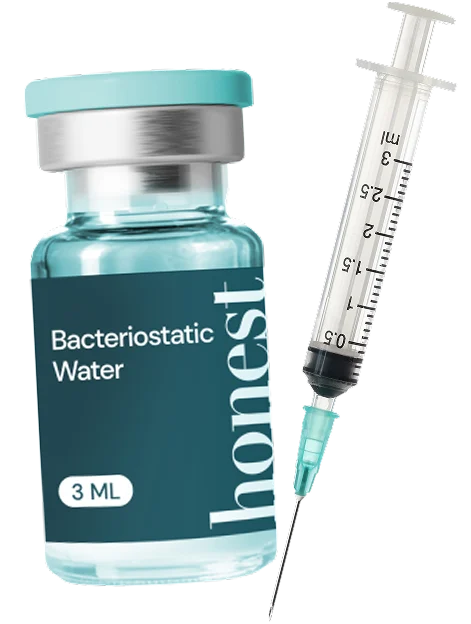
STEP 3
Add your water volume
The volume of water you add affects the concentration of the peptide solution. Enter the amount of water in milliliters (mL).
Semax Dosage: What the research says
This information is based on preclinical and clinical research studies. Semax is not FDA-approved for human use. This content is for research and informational purposes only
Common Research Doses
The presets in our calculator reflect commonly discussed lower-intensity Semax research amounts while recognizing that published protocols vary substantially by model, endpoint, body weight, and route of administration.
- Low (0.3mg / 300mcg): A conservative calculation preset aligned with the lower end of commonly discussed Semax research amounts. Animal studies frequently use weight-adjusted intranasal amounts around 0.05mg/kg, making lower fixed amounts useful for small-scale or exploratory calculation models.¹
- Mid (0.6mg / 600mcg): A practical midpoint for research calculations involving repeated intranasal exposure and neurotrophic or cognitive endpoints. Semax studies have examined effects on BDNF-related signaling, memory, attention, and neuronal responses after intranasal administration.²³
- High (1.0mg / 1,000mcg): An upper general-purpose calculator preset for higher-exposure experimental models. It remains substantially below the total daily amounts used in some acute ischemic-stroke studies, where 12–18mg per day was evaluated over short treatment courses.⁴
Frequency of Administration
Semax frequency varies according to the research endpoint. Many animal studies use once-daily administration, often for repeated periods ranging from several days to approximately two weeks. For example, experimental models have administered Semax daily at 0.05mg/kg for 10–14 days or from postnatal day 15 through day 28.¹⁵
Route of Administration
Semax has been studied using several routes, but the evidence base is not evenly distributed
- Intranasal administration is the dominant route in published human and neurocognitive research
- Injectable animal studies have also used subcutaneous, intraperitoneal and intravenous administration to evaluate neurological, stress-response, gastrointestinal, and systemic endpoints.
Study Duration
Semax study duration depends heavily on the endpoint being measured.
- Acute studies: Clinical investigations involving ischemic stroke have used short treatment courses of approximately 5–10 days, with larger total daily intranasal amounts selected according to stroke severity.⁴
- Short repeated-exposure studies: Animal studies commonly administer Semax daily for approximately 10–14 days while evaluating behavior, learning, stress response, or neurochemical changes.¹⁵
- Longer developmental models: Some experiments have administered Semax daily over roughly two weeks during defined postnatal periods and assessed behavioral or metabolic outcomes later in development.¹
Evidence Limitations
Semax has a broader research history than many experimental peptides, but the evidence has important limitations. Much of the published literature comes from Russian research groups, and many clinical papers are older, small, incompletely reported in English, or focused on acute neurological conditions rather than healthy-subject cognitive enhancement. Semax has shown effects on BDNF-related signaling, gene expression, neuroinflammatory pathways, learning, and neuroprotection in animal and cellular models, but these findings do not establish general clinical efficacy.²³⁶⁸
Scientific References
- Volodina MA, et al. Correction of long-lasting negative effects of neonatal isolation by Semax in rats. Bulletin of Experimental Biology and Medicine. 2012. https://pubmed.ncbi.nlm.nih.gov/22708068/
- Dolotov OV, et al. Semax, an analog of ACTH(4–10) with cognitive effects, regulates BDNF/TrkB signaling. Brain Research. 2006. https://pubmed.ncbi.nlm.nih.gov/16996037/
- Dolotov OV, et al. Semax, an analogue of adrenocorticotropin (4–10), binds specifically and increases levels of brain-derived neurotrophic factor protein in rat basal forebrain. Journal of Neurochemistry. 2006;97(Suppl 1):82–86. https://pubmed.ncbi.nlm.nih.gov/16635254/
- Gusev EI, et al. Effectiveness of Semax in the acute period of hemispheric ischemic stroke. 1997. https://pubmed.ncbi.nlm.nih.gov/11517472/
- Vilenskiĭ DA, et al. Effects of chronic Semax administration on exploratory and behavioral responses in rats. 2007. https://pubmed.ncbi.nlm.nih.gov/17850024/
- Medvedeva EV, et al. The peptide Semax affects the expression of genes related to the immune and vascular systems in rat focal cerebral ischemia. BMC Genomics. 2014;15:228.
https://pmc.ncbi.nlm.nih.gov/articles/PMC3987924/ - Manchenko DM, et al. Nootropic and analgesic effects of Semax following different routes of administration. 2010. https://pubmed.ncbi.nlm.nih.gov/21268834/
- Dergunova LV, et al. The peptide drug ACTH(4–7)PGP (Semax) suppresses inflammatory responses in an experimental stroke model. 2021. https://pubmed.ncbi.nlm.nih.gov/34097675/
Shop peptides