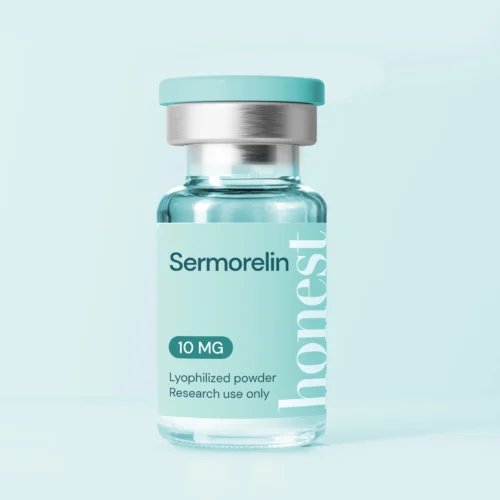
Sermorelin Dosage Calculator
This Sermorelin dosage calculator estimates syringe units, concentration, vial yield, and how long a vial will last based on vial size, water volume, and amount per dose
Common Sermorelin parameters are pre-selected for faster calculation.
Go to peptide-specific calculator ↓
Result
To have a dose of 1mg pull the syringe to 0

Your vial contains
0.0 dosesConcentration
0.0 mg/mLYour vial will last —
Select Your Specific Peptide
Reconstitution guide
Use our Peptide Calculator below to calculate accurate dosages foradministering peptides using a syringe.
STEP 1
Set your dose
Choose your intended dose in micrograms (mcg): This is the amount of peptide you plan to inject each time.
STEP 2
Enter your peptide strength
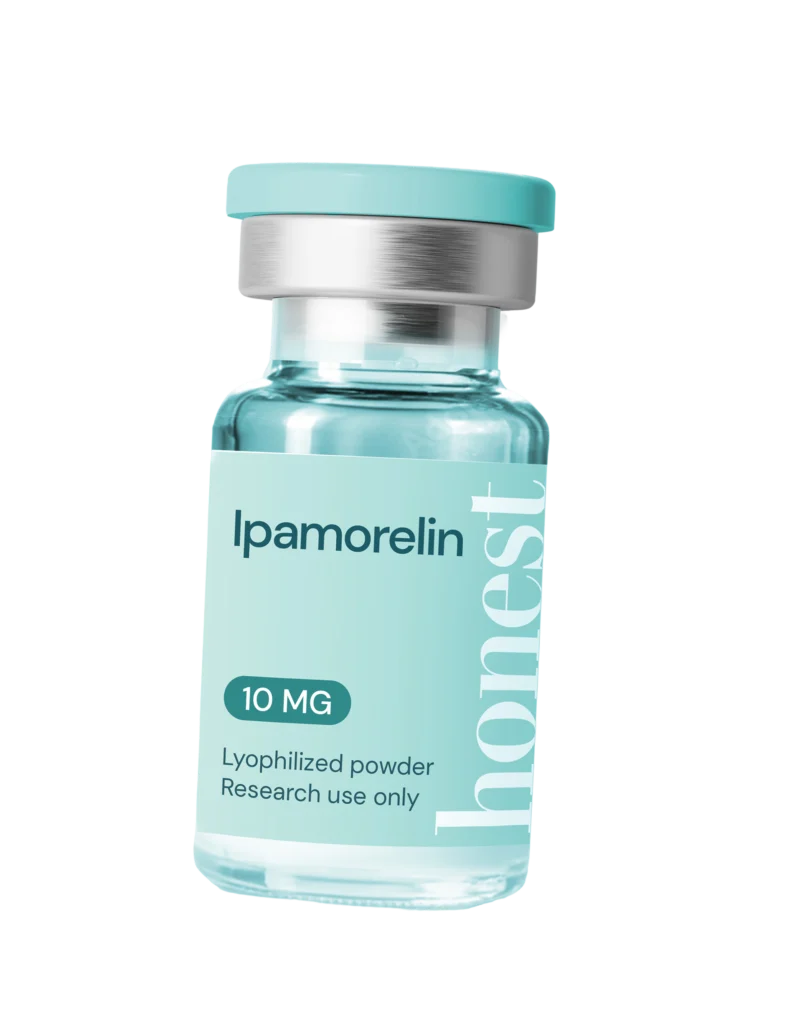
Enter the peptide strength in your vial. You can select a common amount, such as 1mg, 5mg, 10mg, or 15mg. If your amount isn’t listed, you can manually type in the exact amount.
STEP 3
Add your water volume
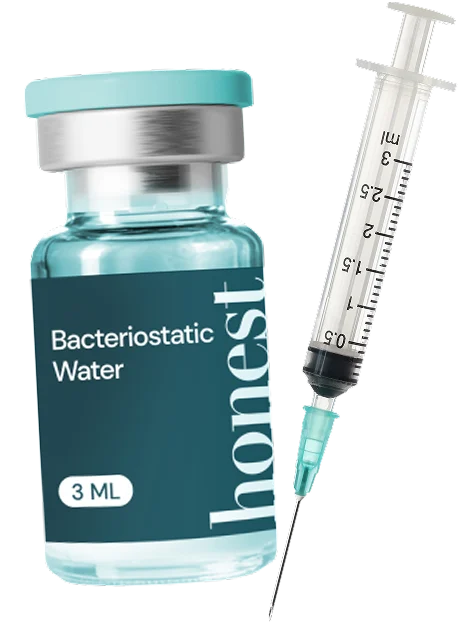
The volume of water you add affects the concentration of the peptide solution. Enter the amount of water in milliliters (mL).
Sermorelin Calculator Dosage: What the research says
This information is based on preclinical and clinical research studies. Sermorelin Calculator is not FDA-approved for human use. This content is for research and informational purposes only
Common Research Doses
- Low (0.2mg / 200mcg): A conservative fixed-amount preset commonly discussed in anecdotal injectable research protocols. This amount is substantially below the weight-adjusted doses used in many historical clinical studies, making it most useful as a lower-range calculator setting rather than a direct clinical-study equivalent.
- Mid (0.3mg / 300mcg): A practical midpoint for modeling repeated Sermorelin exposure. Although 300mcg is not a standardized clinical dose, it sits between the lower fixed amounts commonly discussed anecdotally and the 500mcg-plus amounts evaluated in adult GHRH research.
- High (0.5mg / 500mcg): The lower amount used in a controlled study in older men that compared 0.5mg and 1mg subcutaneous injections twice daily for 14 days. Other studies evaluated approximately 10mcg/kg nightly or fixed nightly amounts as high as 2mg.¹²³
Frequency of Administration
Sermorelin research has used both once-daily and divided daily administration.
Adult aging studies most commonly administered GHRH(1–29) as a single nightly subcutaneous injection, often timed around the natural nocturnal growth-hormone pulse. A four-month study used nightly administration, while a separate six-week study evaluated a single 2mg nightly injection. Other adult research used 0.5mg or 1mg twice daily for 14 days and found increases in GH and IGF-1 secretion.¹²³
Pediatric trials have used once-daily administration as well as doses divided across two or three daily administrations. Once-daily subcutaneous GHRH(1–29) at 30mcg/kg increased height velocity during a one-year study, although other trials found recombinant growth hormone produced greater growth responses.⁴⁵
For the calculator, Daily is the most appropriate default because it reflects the most familiar adult research pattern and gives a straightforward vial-duration estimate. Twice-daily and custom options can support less common study designs.
Route of Administration
The standard route in longer-duration Sermorelin research is subcutaneous injection. Subcutaneous GHRH(1–29) has been used in adult aging studies, pediatric growth studies, and dose-response research. A study in healthy volunteers found that a 3mcg/kg subcutaneous amount produced a measurable GH response, while longer studies used repeated subcutaneous administration over periods ranging from two weeks to one year.¹³⁴
Study Duration
Sermorelin study duration varies substantially according to the research objective.
- Short-duration studies: Adult studies have used repeated subcutaneous administration for approximately 14 days to six weeks to evaluate GH pulsatility, IGF-1, body composition, and muscle-related endpoints.¹²
- Longer adult studies: Nightly administration has been evaluated for approximately four months, producing sustained increases in nocturnal GH secretion and IGF-1, although physiological and body-composition responses differed between men and women.³
- Pediatric studies: Treatment periods commonly ranged from six to twelve months, with limited data extending to 36 months. Responses varied according to the cause and severity of growth-hormone deficiency, and recombinant GH generally produced stronger growth outcomes in comparative trials.⁴⁵⁸
Evidence Limitations
Sermorelin has a more substantial clinical history than many research peptides, but the evidence is heterogeneous.
The published literature includes pediatric growth-hormone-deficiency trials, acute diagnostic studies, and relatively small studies in older adults. The amounts ranged from low weight-adjusted stimulation doses to repeated fixed amounts of 0.5–2mg, making it difficult to define one universal research range. Many studies are also several decades old and measured surrogate endpoints such as GH secretion, IGF-1, or height velocity rather than broader long-term clinical outcomes.
Sermorelin requires preserved pituitary responsiveness because it stimulates endogenous GH release rather than supplying growth hormone directly. This helps explain why responses varied among participants and why some children responded less strongly than those receiving recombinant GH.
Sermorelin was previously marketed in the United States as Geref for diagnostic use and for selected pediatric patients with growth-hormone deficiency. Those products were later discontinued, and FDA determined that their withdrawal was not for reasons of safety or effectiveness. There is no currently marketed FDA-approved Sermorelin product for anti-aging, body-composition enhancement, athletic performance, or adult growth-hormone optimization.⁹
Scientific References
- Corpas E, Harman SM, Piñeyro MA, Roberson R, Blackman MR. Growth hormone (GH)-releasing hormone-(1–29) twice daily reverses the decreased GH and insulin-like growth factor-I levels in old men. Journal of Clinical Endocrinology & Metabolism. 1992;75(2):530–535.
https://pubmed.ncbi.nlm.nih.gov/1379256/ - Vittone J, Blackman MR, Busby-Whitehead J, et al. Effects of single nightly injections of growth hormone-releasing hormone (GHRH 1–29) in healthy elderly men. Metabolism. 1997;46(1):89–96.
https://pubmed.ncbi.nlm.nih.gov/9005976/ - Khorram O, Laughlin GA, Yen SSC. Endocrine and metabolic effects of long-term administration of [Nle27] growth hormone-releasing hormone-(1–29)-NH2 in age-advanced men and women. Journal of Clinical Endocrinology & Metabolism. 1997;82(5):1472–1479.
https://pubmed.ncbi.nlm.nih.gov/9141536/ - Thorner M, Rochiccioli P, Colle M, et al. Once-daily subcutaneous growth hormone-releasing hormone therapy accelerates growth in growth hormone-deficient children during the first year of therapy. Journal of Clinical Endocrinology & Metabolism. 1996.
https://pubmed.ncbi.nlm.nih.gov/8772599/ - Chen RG, Shen YY, Jeng CY, et al. Growth hormone-releasing hormone-(1–29)-NH2 for stimulation of growth in children with growth hormone deficiency. 1993.
https://pubmed.ncbi.nlm.nih.gov/8329830/ - Vance ML, Evans WS, Kaiser DL, et al. The effect of intravenous, subcutaneous, and intranasal GH-RH analog, [Nle27]GHRH(1–29)-NH2, on growth hormone secretion in normal men: dose-response relationships. Clinical Pharmacology & Therapeutics. 1986;40(6):627–633.
https://pubmed.ncbi.nlm.nih.gov/3096623/ - Aitman TJ, et al. Bioactivity of growth hormone-releasing hormone (1–29) and an agonist analogue following subcutaneous administration in normal male volunteers. 1989.
https://pubmed.ncbi.nlm.nih.gov/2546126/ - Kirk JM, et al. Treatment with GHRH(1–29)-NH2 in children with idiopathic growth hormone deficiency. 1994.
https://pubmed.ncbi.nlm.nih.gov/7955460/ - U.S. Food and Drug Administration. Determination That GEREF (Sermorelin Acetate) Injection Was Not Withdrawn From Sale for Reasons of Safety or Effectiveness. Federal Register. 2013.
https://www.federalregister.gov/documents/2013/03/04/2013-04827/determination-that-geref-sermorelin-acetate-injection-05-milligrams-basevial-and-10-milligrams
Shop peptides